




Could Neanderthals Make You Rethink the Adam and Eve Story? Here’s What Science Says
By Ravoke News Desk For generations, the biblical account of Adam and Eve has shaped how millions of people understand the origins of humanity. Yet over the past century, remarkable

By Ravoke News Desk
For generations, the biblical account of Adam and Eve has shaped how millions of people understand the origins of humanity. Yet over the past century, remarkable discoveries buried beneath ancient caves, riverbanks, and mountain ranges have revealed another chapter of human history—one that continues to challenge long-held assumptions about where we came from.
Scientists have uncovered thousands of fossils, sophisticated stone tools, ancient DNA, and even evidence of symbolic behavior belonging to a group of humans known as the Neanderthals. Rather than being primitive “cavemen,” modern research paints a far more complex picture of these ancient relatives, suggesting they were intelligent, adaptable, and capable of behaviors once believed to be unique to modern humans.
Their story isn’t about replacing religious beliefs but expanding our understanding of humanity’s deep and fascinating past.
Who Were the Neanderthals?
Neanderthals were an extinct species of human scientifically classified as Homo neanderthalensis. They lived across Europe and parts of western and central Asia for hundreds of thousands of years before disappearing roughly 40,000 years ago.
Unlike earlier depictions in popular culture, Neanderthals were not ape-like creatures. They belonged to the human family tree and shared a common ancestor with modern humans hundreds of thousands of years ago.
Today’s research indicates that Neanderthals and Homo sapiens followed separate evolutionary paths after diverging from a shared ancestor, eventually developing into two closely related but distinct human species.
Even more remarkable is the discovery that these two populations didn’t remain completely separate. Genetic evidence has shown that they interbred, leaving traces of Neanderthal DNA in many people living today.
Ancient DNA Changed Everything
For decades, scientists relied solely on fossil evidence to reconstruct the lives of Neanderthals. That changed dramatically when advances in genetic science allowed researchers to extract and analyze DNA preserved inside ancient bones.
Those discoveries transformed the scientific understanding of human evolution.
Today, researchers know that many modern populations outside Africa carry approximately two percent Neanderthal DNA. This means that encounters between Neanderthals and early modern humans were not simply occasional—they included successful interbreeding that permanently became part of our genetic history.
Rather than representing a completely separate branch with no connection to us, Neanderthals contributed to the biological makeup of millions of people alive today.
A Human Species Built for Survival
Neanderthals first appeared more than 400,000 years ago and successfully survived some of the harshest climates Europe and Asia experienced during the Ice Age.
Their bodies reflected those challenging environments.
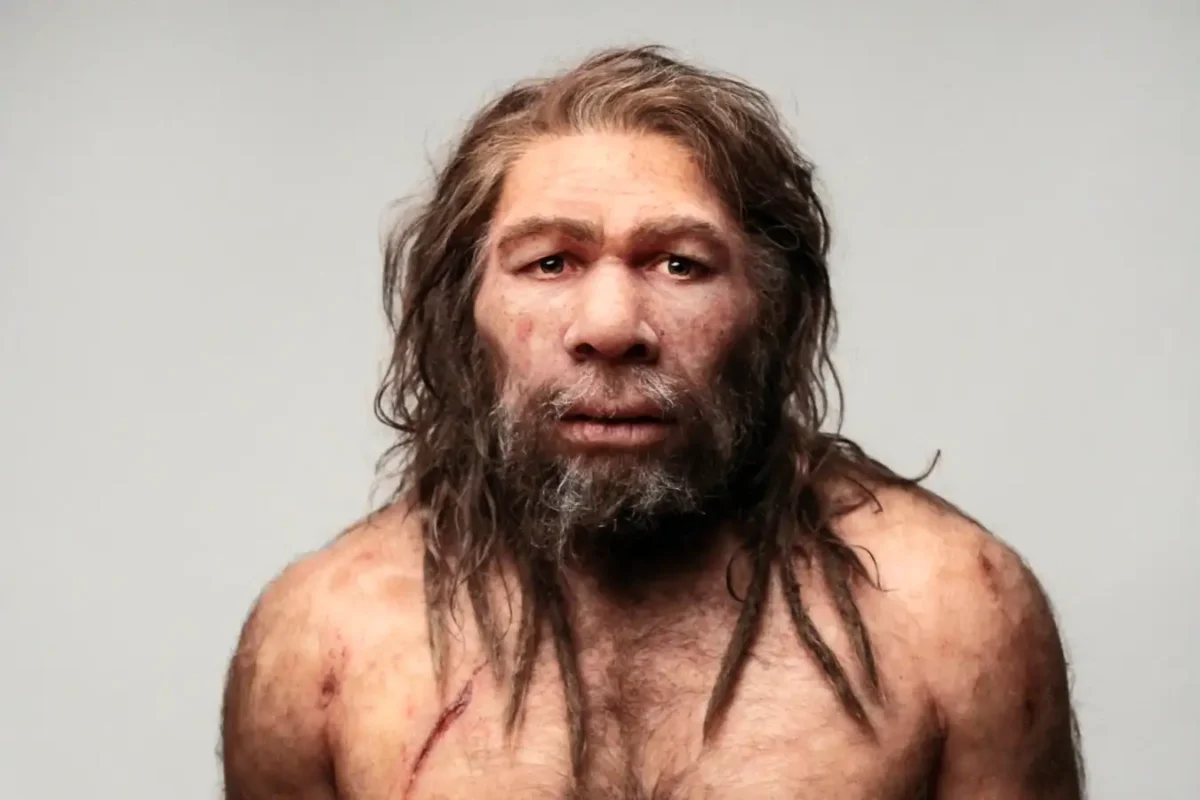
Compared with modern humans, Neanderthals had shorter limbs, broad shoulders, powerful muscles, wide hips, and barrel-shaped chests. These features helped conserve body heat in freezing temperatures.
One of their most recognizable traits was their large nose. Scientists believe its expanded internal structure likely helped warm and humidify the cold, dry air before it reached their lungs.
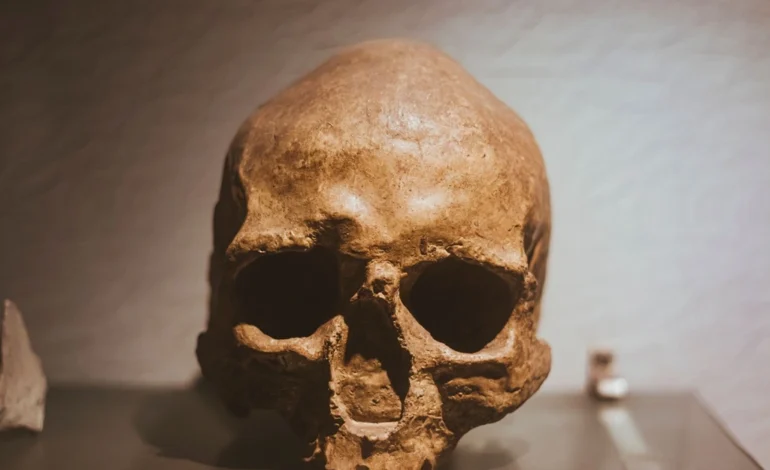
Their skulls also differed from ours, featuring pronounced brow ridges, elongated craniums, and little to no visible chin.
Despite these physical differences, their average brain size equaled—and in many cases exceeded—that of modern humans.
Far Smarter Than the “Caveman” Myth
For much of the twentieth century, Neanderthals were portrayed as slow, unintelligent cave dwellers.
Modern archaeology has largely dismantled that stereotype.
Excavations across Europe and Asia have revealed that Neanderthals developed advanced stone-working techniques capable of producing specialized hunting tools with impressive precision.
One innovation allowed them to prepare stone cores in advance, making it easier to manufacture sharp cutting tools wherever they traveled. This reflected long-term planning, technical skill, and an understanding of engineering principles that scientists once believed belonged only to modern humans.
Evidence also shows they hunted dangerous prey including mammoths, bison, horses, and reindeer.
These were not random scavengers. Successful hunting of massive Ice Age animals required teamwork, communication, strategy, and extraordinary courage.
More Compassionate Than Once Believed
Perhaps one of the most surprising discoveries involves how Neanderthals treated members of their own communities.
Several skeletons reveal individuals who survived serious injuries that would have prevented them from hunting or gathering food independently.
The fact that these individuals lived for years after sustaining debilitating injuries strongly suggests they received long-term care from others.
Archaeologists have also uncovered evidence that some Neanderthal groups intentionally buried their dead.
Although researchers continue debating the meaning behind these burials, they indicate behaviors that go beyond simple survival and hint at emotional or cultural traditions.
Did Neanderthals Create Art?
One of the biggest questions surrounding Neanderthals has been whether they possessed imagination and symbolic thought.
Growing evidence suggests they did.
Researchers have discovered jewelry crafted from animal teeth, bird talons, shells, and ivory that appears to have served decorative rather than practical purposes.
Some archaeological sites also contain pigments believed to have been used for body decoration or symbolic expression.
Perhaps the most controversial discoveries involve cave paintings in Spain that some researchers date to a period before modern humans reached the region.
If those dates are correct, Neanderthals may have been responsible for creating abstract symbols and hand stencils thousands of years before Homo sapiens arrived.
Although scientists continue debating certain interpretations, few now argue that Neanderthals lacked creativity altogether.
What Did They Eat?
The popular image of Neanderthals focuses almost entirely on hunting giant Ice Age animals.
While meat certainly formed an important part of their diet, newer research reveals it was far more varied.
Analysis of fossilized dental plaque has uncovered evidence that Neanderthals consumed plants, edible fungi, nuts, seeds, and other vegetation depending on local environments.
Coastal populations also harvested shellfish and marine resources when available.
This flexible approach to food likely helped them survive across dramatically different climates ranging from frozen grasslands to Mediterranean forests.
Could They Speak?
No one can know exactly what Neanderthal conversations sounded like.
Soft tissues necessary for speech rarely survive in the fossil record.
However, anatomical studies suggest their vocal structures were broadly similar to those of modern humans.
Their ear bones also indicate hearing abilities comparable to ours.
Combined with evidence of cooperative hunting, caregiving, and complex social behavior, many researchers believe Neanderthals almost certainly possessed spoken language, even if it differed from languages used today.
Why Did They Disappear?
The disappearance of Neanderthals remains one of archaeology’s greatest mysteries.
Rather than vanishing suddenly, evidence suggests their populations gradually declined over thousands of years.
Scientists believe multiple factors likely contributed.
Rapid climate shifts repeatedly transformed the environments where Neanderthals lived, reducing food supplies and fragmenting already small populations.
At roughly the same time, modern humans expanded into Europe and western Asia.
Competition for territory and resources may have placed additional pressure on Neanderthal communities.
Genetic studies also indicate many late Neanderthal populations were relatively small and isolated, increasing the likelihood of inbreeding and reducing long-term survival.
Instead of one dramatic event causing extinction, researchers increasingly believe several environmental and biological challenges combined over time.
The Discovery That Changed Human History
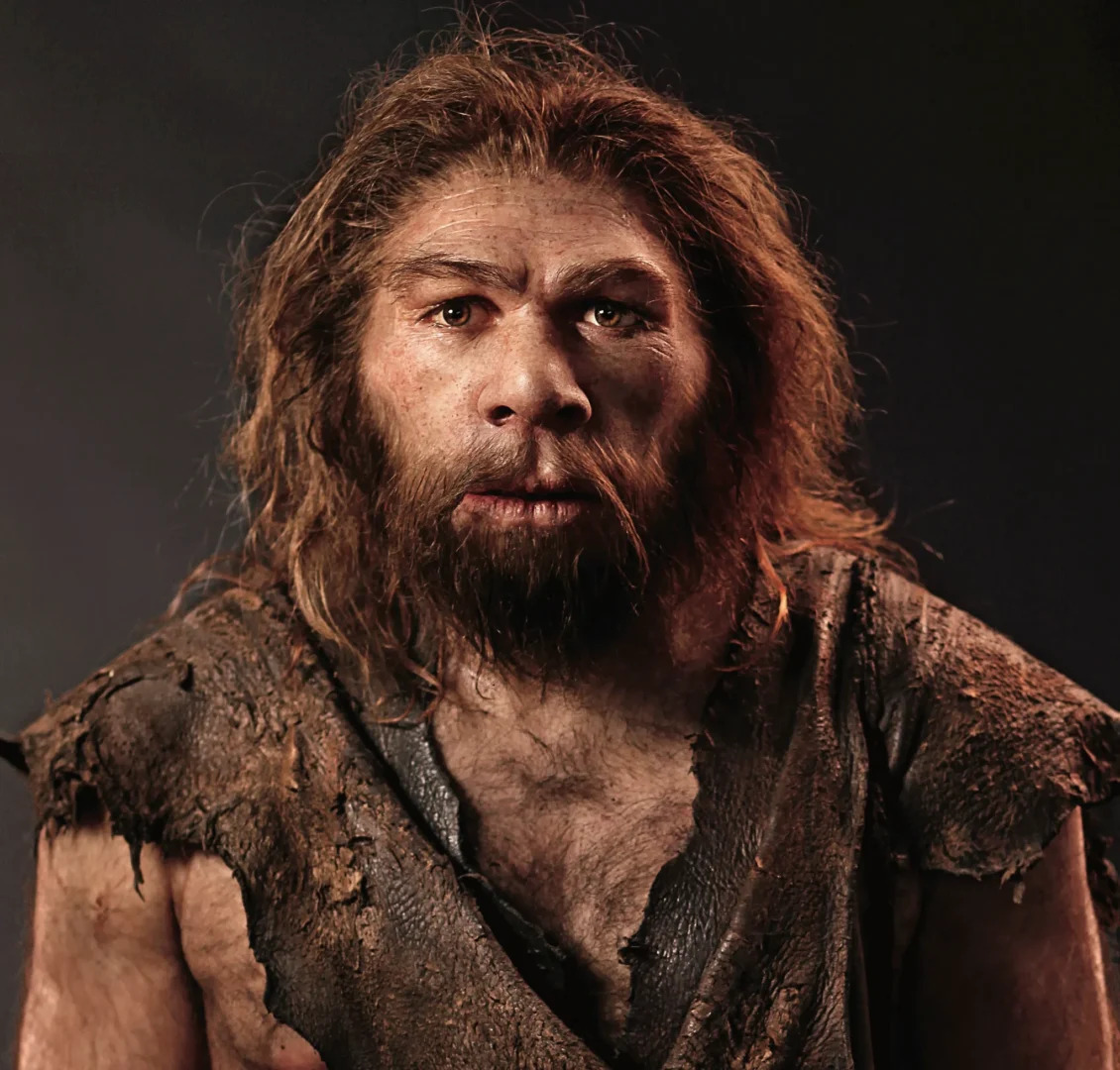
Although Neanderthal fossils had been discovered earlier, their true significance wasn’t recognized until the mid-19th century.
A partial skeleton uncovered in Germany’s Neander Valley eventually became the first ancient human species officially identified by science.
Since then, thousands of fossils have been recovered across Europe and Asia, allowing researchers to reconstruct much of Neanderthal biology, behavior, and evolution.
Some of the most significant discoveries include remarkably preserved skulls, nearly complete skeletons, and ancient DNA that continues to reshape scientific understanding of human origins.
Does Science Challenge the Story of Adam and Eve?
For many readers, the discovery of Neanderthals naturally raises questions about the biblical account of Adam and Eve.
Science and faith often approach human origins from different perspectives.
Scientific research seeks to understand physical evidence preserved in fossils, genetics, archaeology, and geology, while religious traditions explore humanity’s spiritual origins and relationship with God.
Whether these perspectives are viewed as conflicting or complementary largely depends on individual beliefs and theological interpretation.
What is clear is that discoveries involving Neanderthals have fundamentally expanded humanity’s understanding of our ancient past.
Far from being primitive creatures on the edge of evolution, Neanderthals were intelligent humans who built tools, cared for one another, adapted to harsh climates, hunted dangerous animals, created symbolic objects, and ultimately left a lasting imprint within our own DNA.
Their story serves as a powerful reminder that the history of humanity is far richer, more complex, and more extraordinary than anyone imagined just a century ago.