



The Drink You Take With Your Pills Could Change How Well Your Medication Works
By Ravoke News Desk Many people take their daily medications with whatever drink is nearby—a glass of water, coffee, juice, or even mineral water. However, new research suggests that the

By Ravoke News Desk
Many people take their daily medications with whatever drink is nearby—a glass of water, coffee, juice, or even mineral water. However, new research suggests that the liquid used to swallow certain pills may influence how those medications work inside the body.
A recent laboratory study published in the journal Pharmaceutics examined how different beverages affected medicines with special protective coatings. Researchers found that alkaline mineral water may cause some enteric-coated medications to break down too quickly, potentially changing where and when the medicine is released.
While the findings do not mean people should stop drinking mineral water or change how they take prescribed medications without medical advice, the research highlights an often-overlooked factor in medication safety: what patients use to swallow their pills.
Why Some Pills Have Protective Coatings
Many medications are designed with special outer layers known as enteric coatings.
These coatings serve an important purpose. They protect the medication from the acidic environment of the stomach and allow the active ingredients to be released later, usually after the tablet reaches the small intestine.
The small intestine has a less acidic environment with a higher pH level, allowing the coating to dissolve at the intended time.
This delivery system is commonly used for medications that could irritate the stomach or medicines that need to reach specific areas of the digestive system before releasing their active ingredients.
Examples of medications that may use enteric coatings include certain forms of aspirin and acid-reducing medicines such as proton pump inhibitors.
If the coating breaks down too early, the medication may not work as intended.
Researchers Examine How Different Drinks Affect Pills
Scientists from Semmelweis University in Hungary investigated whether different liquids could influence the stability of enteric-coated tablets.
The research team exposed coated medications to several commonly consumed beverages, including:
- Tap water
- Filtered water
- Apple juice
- Various alkaline mineral waters
The liquids were selected because they have different chemical properties and pH levels.
The goal was to determine whether the surrounding environment could change how quickly the medication coating dissolved.
Researchers discovered that alkaline mineral waters had a much stronger effect on the protective coating compared with regular water and apple juice.
In one test involving a highly alkaline mineral water product, more than 90% of the medication content was released after only five minutes of exposure.
By comparison, tap water, filtered water, and apple juice caused minimal medication release during the same time period.
Why pH Levels Matter for Medication Absorption
The findings are connected to the chemistry behind how medicines are designed.
The pH level of a liquid measures how acidic or alkaline it is. While plain water is generally close to neutral, some mineral waters contain naturally occurring compounds that make them more alkaline.
Enteric coatings are engineered to respond to specific pH conditions. If they encounter an environment that triggers early breakdown, the medication may begin dissolving before reaching the intended location in the digestive system.
This could affect how much of the active ingredient is absorbed and how effectively the treatment works.
Researchers say the concern is especially relevant for medications that depend on delayed release to function properly.
What This Could Mean for Patients
The study was performed in laboratory conditions rather than in people, meaning real-world effects may differ.
Inside the human body, medications interact with saliva, stomach fluids, digestive movement, and other biological factors that were not fully represented in the experiment.
However, researchers say the findings provide important information about a subject that has received limited attention: the relationship between beverages and medication performance.
For many patients, taking pills with water is a routine habit that does not receive much consideration. Yet the liquid used during medication administration may become more important for certain drugs with specialized formulations.
Healthcare professionals say patients should avoid making assumptions about all medications because different drugs are designed in different ways.
Early Medication Release May Create Problems
When a medication is designed to dissolve in a specific part of the digestive system, timing is an important part of how the treatment works.
If a protective coating breaks down too early, the active ingredient may be released in the wrong location. This could reduce how effectively the medication is absorbed or change the way the body responds to the treatment.
For some medicines, early release may also increase the chance of unwanted effects.
Certain medications are coated because their ingredients can irritate the stomach. If those drugs dissolve before reaching the small intestine, patients may experience digestive discomfort, including nausea, stomach irritation, or abdominal symptoms.
However, researchers emphasize that the recent findings do not prove that people who drink alkaline mineral water will experience medication problems. The study was conducted under laboratory conditions, and additional research involving patients would be needed to determine whether the same effects occur in the human body.
Why Plain Water Remains the Safest Option
Healthcare professionals generally recommend taking most medications with plain water unless a doctor or pharmacist provides different instructions.
Water is widely considered the most predictable option because it typically does not contain substances that significantly alter medication chemistry.
Unlike certain juices, beverages with added minerals, or highly alkaline drinks, regular water creates fewer concerns about changing how a tablet dissolves.
Taking medication with enough water can also help pills move through the esophagus and reach the stomach properly, reducing the risk of irritation or discomfort.
For patients who take multiple medications each day, using water consistently can also make medication routines simpler and easier to follow.
Other Drinks That May Affect Medication
Alkaline mineral water is only one example of how beverages can potentially interact with medicines.
Certain medications are already known to be affected by specific drinks.
For example, grapefruit juice can interfere with enzymes involved in breaking down some medications, potentially increasing or decreasing the amount of medicine that enters the bloodstream.
Dairy products may affect the absorption of some antibiotics and other medications because minerals such as calcium can bind with certain drug ingredients.
Caffeine-containing beverages may also influence some treatments, particularly medications related to the nervous system or heart health.
Alcohol can create serious interactions with many prescription and over-the-counter medications, including increased drowsiness, impaired coordination, and changes in how drugs are metabolized.
Because interactions vary widely between medications, patients should follow instructions provided by healthcare professionals rather than assuming one drink is suitable for every pill.
Why Medication Instructions Matter
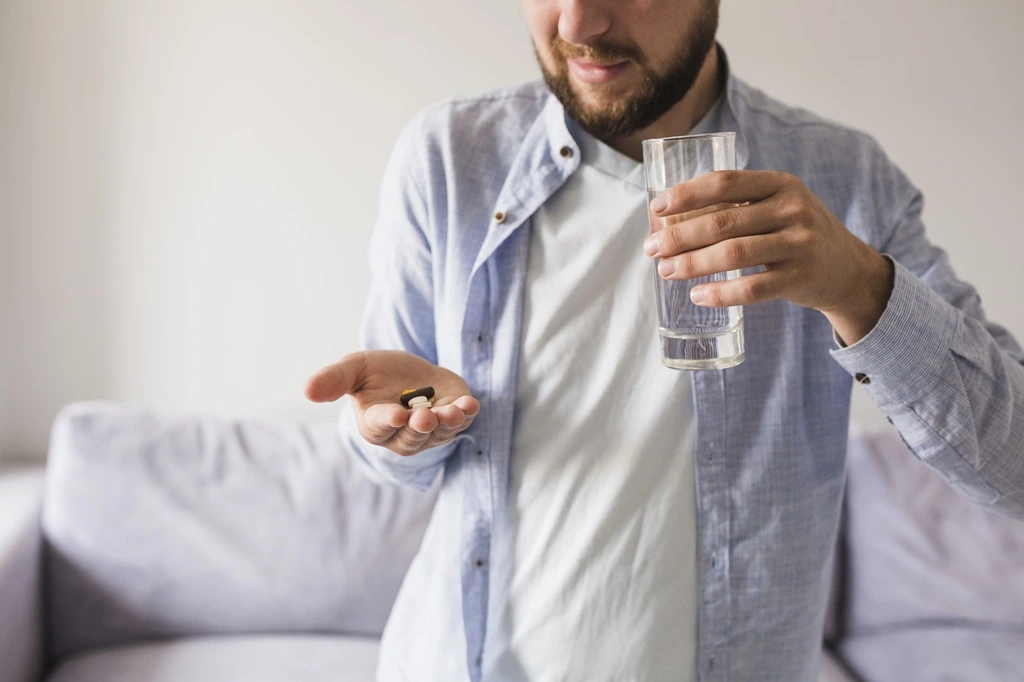
Medication labels often include specific guidance about how a drug should be taken. These instructions may recommend taking a medicine with food, on an empty stomach, or with a full glass of water.
These directions are not simply suggestions—they are designed to improve safety and effectiveness.
For example, some medications require food to improve absorption, while others need an empty stomach to work properly.
Some extended-release or delayed-release tablets should never be crushed, broken, or altered because doing so can interfere with the way the medication enters the body.
Patients who are unsure about how to take a medication should ask a pharmacist or healthcare provider before changing their routine.
Pharmacists Can Help Identify Medication Risks
Pharmacists play an important role in preventing medication problems because they understand how drugs interact with food, beverages, supplements, and other medications.
A pharmacist can review a patient’s medication list and provide guidance about:
- The best drink to use when taking specific medicines.
- Whether a medication should be taken with meals.
- Foods or beverages that should be avoided.
- Possible side effects caused by incorrect use.
This is particularly important for people who take several medications, as the possibility of interactions increases when multiple treatments are combined.
A Growing Area of Medication Research
The relationship between medications and everyday habits continues to be an area of scientific interest.
Researchers are increasingly studying how factors such as diet, hydration, supplements, and lifestyle choices influence medication performance.
As more people take medications for chronic conditions, understanding these interactions may become an important part of improving treatment outcomes.
The recent research on alkaline mineral water adds to a larger discussion about medication quality, patient education, and the importance of following evidence-based guidance.
The Bottom Line: Use Water Unless Told Otherwise
For most people, taking medication with plain tap or filtered water remains the safest and most reliable approach.
The new research does not suggest that alkaline mineral water is dangerous for everyone, but it raises questions about whether certain beverages could affect specialized medications.
Patients should avoid changing prescribed treatments based on a single study and should not stop taking medications without consulting a healthcare professional.
Instead, the best approach is simple: follow medication instructions, use water when no other guidance is provided, and ask a pharmacist or doctor when there is uncertainty.
Small daily habits, including what people drink when taking a pill, can play a role in ensuring medications work as intended.
Ravoke Health Desk advises: medication safety depends on more than the pill itself. Proper timing, correct storage, and following professional guidance all contribute to getting the intended benefit from treatment.