





The Hidden Face of Racism in Asia: Why the Region Can No Longer Ignore a Growing Reality
By Ravoke News Desk For decades, conversations about racism have largely centered on Europe and the United States. Images of civil rights marches, police violence, and discrimination have dominated international


By Ravoke News Desk
For decades, conversations about racism have largely centered on Europe and the United States. Images of civil rights marches, police violence, and discrimination have dominated international headlines, creating the perception that racism is primarily a Western issue. Yet beneath the surface, countries across Asia are confronting their own histories—and present-day realities—of racial and ethnic discrimination.
While many Asian nations have traditionally viewed racism as a problem occurring somewhere else, growing research, public debate, and firsthand accounts are revealing a far more complicated picture. From housing and employment discrimination to ethnic profiling and institutional bias, evidence increasingly shows that racism exists throughout Asia, even if it often takes different forms than those commonly discussed in Western societies.
The challenge now is no longer whether racism exists in Asia, but whether governments and societies are prepared to acknowledge it.
A Global Problem Often Framed as an American One
Public opinion surveys conducted over the past several years have consistently shown that many people across Asia view racial discrimination as a serious issue in the United States. At the same time, far fewer believe similar problems exist within their own borders.
That perception has contributed to a narrative in which racism is treated as a foreign problem rather than a domestic concern.
Experts say this mindset allows uncomfortable conversations to be avoided, leaving longstanding inequalities largely unchallenged. As globalization increases migration, cultural diversity, and international interaction, however, the idea that racism only exists elsewhere is becoming increasingly difficult to defend.
Across Asia, communities are beginning to question social attitudes that have existed for generations.
Racism Looks Different Around the World
One reason racism in Asia has often escaped international attention is that it rarely follows the same historical path as racial discrimination in Europe or North America.
Instead of mirroring Western systems, many forms of discrimination throughout Asia have developed through local histories involving ethnicity, nationality, religion, language, migration, caste, and cultural identity.
Although the circumstances differ from country to country, the underlying pattern is familiar: one group is often viewed as more authentic, more desirable, or more deserving than another.
These attitudes can shape hiring decisions, education, housing opportunities, marriage, social acceptance, and even government policy.
Recognizing these local realities is essential to understanding racism as a global issue rather than one confined to any single region.
Civil Society Is Bringing Difficult Conversations Into the Open
Across Asia, advocacy organizations, researchers, and community groups have increasingly begun documenting discrimination that once received little public attention.
Annual reports, academic research, and legal advocacy have highlighted recurring complaints involving unequal treatment in employment, education, immigration systems, public services, and access to housing.
Organizations working with migrant communities have also documented the challenges faced by foreign workers who often experience barriers that extend well beyond language differences.
As migration continues to reshape many Asian economies, these conversations are becoming more urgent.
Countries that once considered themselves relatively homogeneous are becoming more culturally diverse, forcing societies to reconsider long-held assumptions about identity and belonging.
Migration Is Changing the Conversation
Economic growth has transformed several Asian nations into destinations for international workers, students, and professionals.
As immigrant populations expand, new questions emerge about social integration, equal opportunity, and cultural acceptance.
While diversity has enriched many communities, it has also exposed prejudice that previously remained hidden.
Foreign residents in several countries have reported discrimination when applying for jobs, renting apartments, accessing services, or interacting with public institutions.
Many describe subtle forms of exclusion rather than overt hostility—making the problem harder to identify but no less significant.
Japan’s Quiet Struggle With Racial Discrimination
Japan has long enjoyed an international reputation for safety, order, and social cohesion.
However, beneath that image lies a growing debate over racial discrimination and the experiences of both foreign residents and ethnically diverse Japanese citizens.
For years, many people believed racism was largely absent from Japanese society.
That perception has begun to shift as research and surveys reveal patterns of unequal treatment affecting employment, housing, education, and everyday life.
Numerous foreign residents report being refused rental housing, denied employment opportunities, or treated differently because of their nationality or appearance.
While such experiences vary widely, they have fueled increasing discussion about whether existing laws provide sufficient protection against discrimination.
The Myth of a Homogeneous Society
One of the biggest challenges in addressing racism in Japan is the long-standing belief that the country is ethnically uniform.
Although Japan is often portrayed as culturally homogeneous, its history tells a far more diverse story.
Indigenous communities, regional cultures, long-established minority populations, mixed-heritage families, and generations of migration have all contributed to the country’s identity.
Yet the perception of a single, unified national identity has remained deeply embedded in public discourse.
Critics argue that this narrative can unintentionally obscure the experiences of people who do not fit traditional definitions of what it means to be Japanese.
When diversity itself is overlooked, conversations about discrimination become far more difficult.
Why Many Cases Go Unrecognized
Unlike some countries that collect detailed demographic information about race and ethnicity, Japan primarily records nationality in official population statistics.
As a result, individuals who are Japanese citizens but belong to different ethnic or racial backgrounds often disappear within national data.
Without comprehensive demographic information, measuring racial inequality becomes significantly more challenging.
Researchers argue that understanding discrimination requires recognizing diversity first.
When populations are viewed as largely identical, systemic problems affecting minority communities can remain invisible.
Institutional Racism Doesn’t Always Make Headlines
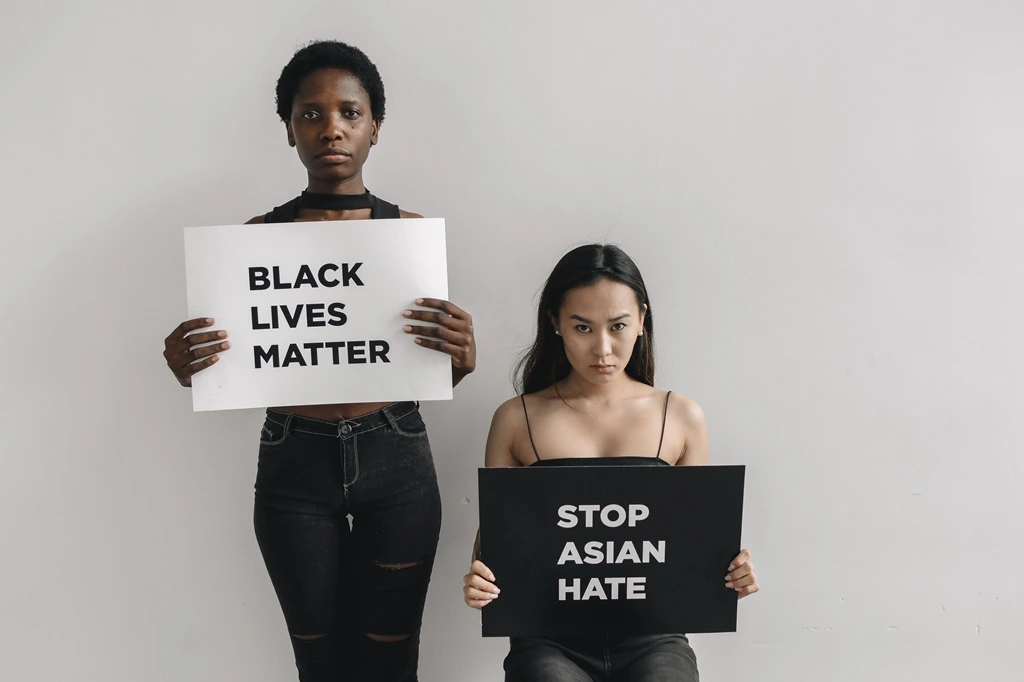
Modern racism is not always expressed through openly discriminatory laws or public acts of hatred.
Instead, many experts describe today’s discrimination as institutional—embedded within systems, policies, and everyday practices.
Housing applications rejected without explanation.
Job opportunities quietly denied.
Businesses refusing service.
Schools where minority students experience exclusion.
Government procedures that create unequal outcomes.
These situations often receive far less attention than dramatic incidents captured on video, yet they may shape daily life for thousands of people.
Denial Can Become Its Own Barrier
Perhaps one of the greatest obstacles to addressing racism is the belief that it does not exist.
When governments or institutions dismiss documented experiences of discrimination, meaningful reform becomes increasingly difficult.
Victims may hesitate to report incidents if they believe their concerns will not be taken seriously.
Public conversations become polarized, with criticism viewed as an attack on national identity rather than an opportunity for improvement.
Acknowledging problems does not diminish a country.
Instead, many experts argue that recognition is the first step toward building stronger, more inclusive societies.
Asia’s Conversation About Race Is Growing
Although progress varies widely across the region, discussions about racism are becoming more visible than they were a decade ago.
Universities are expanding research into ethnic relations.
Community organizations are documenting discrimination more systematically.
Journalists are reporting stories that previously received little attention.
Social media has also allowed individuals to share experiences that once remained private.
Together, these developments are creating a broader understanding of how discrimination affects everyday life.
A Global Issue Requires Global Solutions
Racism is not owned by any one country, culture, or political system.
It exists in different forms across every region of the world, shaped by local history, economics, migration, religion, ethnicity, and social identity.
Reducing the issue to comparisons between East and West risks overlooking the unique challenges faced by millions of people whose experiences do not fit familiar narratives.
Recognizing these differences is not about assigning blame.
It is about understanding that discrimination can only be addressed when societies are willing to confront it honestly.
As Asia becomes increasingly interconnected with the rest of the world, conversations about race, belonging, and equality are likely to become even more important.
Ignoring the problem may preserve old narratives, but acknowledging it creates opportunities for reform, stronger communities, and greater social trust.
The growing debate across Asia suggests that many people are no longer willing to remain silent. Instead, they are calling for societies that recognize diversity, protect equal opportunity, and ensure that no one is excluded because of their race, ethnicity, or background.