




Can Scalp Microneedling Really Regrow Hair? What the Science Says About This Popular Treatment
Written by Ravoke News Desk Hair loss can be frustrating, especially when thinning seems to happen faster than expected. That has helped fuel interest in treatments ranging from medications and

Written by Ravoke News Desk
Hair loss can be frustrating, especially when thinning seems to happen faster than expected. That has helped fuel interest in treatments ranging from medications and supplements to platelet-rich plasma and cosmetic procedures.
One increasingly popular option is scalp microneedling, a treatment that uses tiny needles to create controlled micro-injuries in the skin.
The idea sounds simple: stimulate the scalp’s healing response and potentially encourage hair growth.
But does it actually work?
Research suggests microneedling may help people with certain types of hair loss, particularly androgenetic alopecia, also known as pattern hair loss. Evidence is especially encouraging when microneedling is combined with established treatments such as minoxidil.
However, it isn’t a universal hair-loss cure, and doing it incorrectly—particularly at home—can cause skin damage, infection and scarring.
What Is Scalp Microneedling?
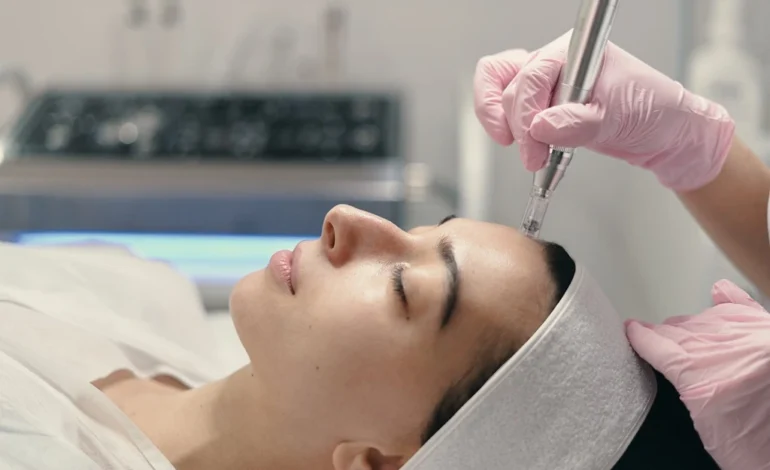
Microneedling involves using a device equipped with very small needles to create controlled punctures in the skin.
When performed on the scalp, those tiny injuries trigger the body’s wound-healing response. Researchers believe this process may influence growth factors and other cellular pathways involved in hair follicle activity.
Microneedling may also make it easier for certain topical treatments to reach the skin.
The strongest research so far has focused on androgenetic alopecia, the most common form of hereditary hair loss in both men and women.
Why Would Tiny Injuries Help Hair Growth?
The theory behind microneedling is that controlled injury can stimulate biological processes involved in tissue repair.
Potential effects include:
- Stimulating activity around hair follicles
- Encouraging the production of collagen and other structural proteins
- Increasing local growth-factor activity
- Potentially improving the delivery of topical hair-loss medications
- Supporting the environment around thinning hair follicles
The exact mechanism is still being studied, so it’s better to think of microneedling as a potential supporting treatment, rather than a guaranteed way to reactivate every dormant follicle.
The Evidence Looks More Promising When Microneedling Is Combined With Minoxidil
One of the most interesting findings from the research is that microneedling may work particularly well when paired with another hair-loss treatment.
The American Academy of Dermatology notes that studies have found greater hair growth when microneedling was combined with 5% minoxidil compared with minoxidil alone.
A 2024 systematic review and meta-analysis examining 13 randomized controlled trials involving 696 people with androgenetic alopecia also found evidence supporting combined microneedling approaches.
More recently, another meta-analysis of randomized trials found that combining microneedling with minoxidil produced significantly greater improvements in hair count than minoxidil alone, although the studies varied considerably in their methods and treatment protocols.
Microneedling May Be an Add-On, Not a Replacement
This distinction is important.
The available evidence does not mean you should abandon established hair-loss treatments and rely on microneedling alone.
Instead, the research suggests it may have value as part of a broader treatment plan for certain types of hair loss.
A dermatologist can determine whether the treatment makes sense based on the cause and pattern of your hair loss.
What Happens During Professional Scalp Microneedling?
Professional microneedling uses medical devices designed to penetrate the skin at controlled depths.
The exact procedure varies depending on the provider, device and treatment plan.
A typical session may involve:
- Examining the scalp and determining whether microneedling is appropriate.
- Cleaning the treatment area.
- Applying a topical anesthetic when appropriate.
- Using the microneedling device across areas of thinning.
- Managing redness or pinpoint bleeding afterward.
- Applying an appropriate treatment when microneedling is being combined with another therapy.
The procedure can cause temporary redness, sensitivity or mild discomfort.
How Deep Do the Needles Go?
Needle depth can vary depending on the device and treatment protocol.
This is one reason professional treatment matters.
Going deeper does not automatically mean better results. Research has not established one universally superior microneedling depth, and recent analysis found substantial variation between studies.
The appropriate approach should be determined by a qualified professional rather than copied from an online video or social-media post.
Can You Microneedle Your Scalp at Home?
- Baldi Locks and The Three Hairs
- Red Light Therapy: Is It Really Worth It, or Just Another Wellness Trend?
This is where caution is especially important.
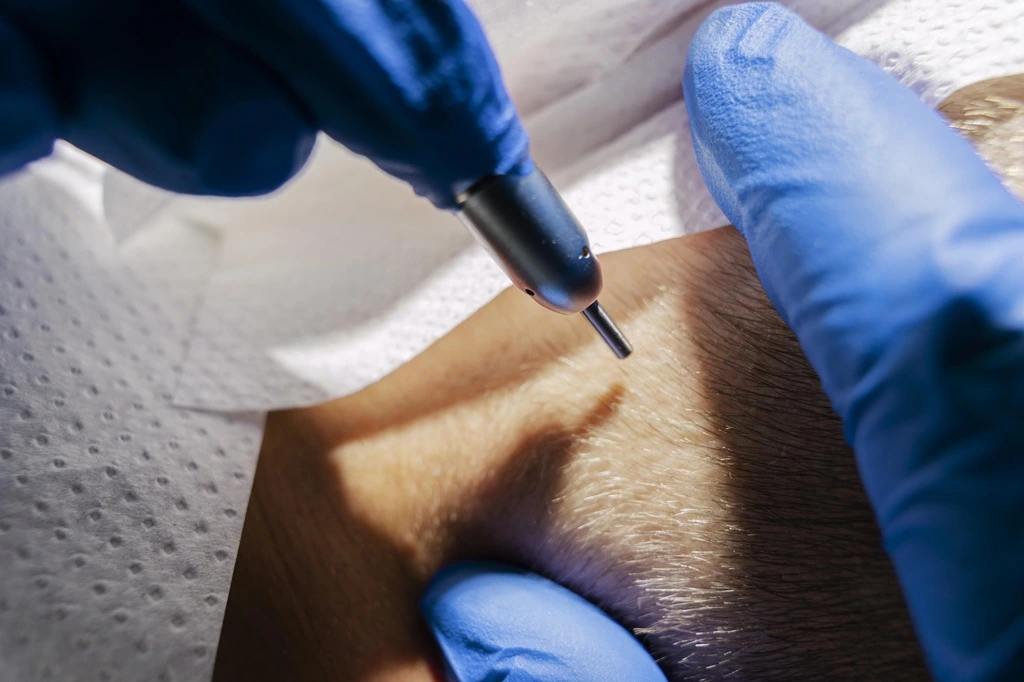
At-home derma rollers and other microneedling devices are widely available, but they are not equivalent to professional treatment.
The American Academy of Dermatology warns that at-home microneedling can lead to infection, scarring, skin damage and pigment changes when performed improperly.
Why DIY Microneedling Can Go Wrong
Your scalp is still skin, and deliberately puncturing it creates an opportunity for bacteria and other microorganisms to enter.
Using too much pressure, repeatedly treating the same area or failing to properly clean equipment can increase the risk of injury and infection.
There is also another problem: you may be treating the wrong condition.
Hair loss has many possible causes, and the treatment that makes sense for hereditary hair loss may not be appropriate for another form of alopecia.
Not Every Type of Hair Loss Responds to Microneedling
This may be the most important thing to understand before considering the procedure.
Hair loss isn’t one disease.
Genetics, autoimmune conditions, medications, nutritional deficiencies, hormonal changes, stress, inflammation and scarring disorders can all contribute to hair loss.
Some types can improve when the underlying problem is treated. Others can result in permanent follicle damage if treatment is delayed.
The American Academy of Dermatology recommends getting the cause of hair loss diagnosed because different forms of hair loss require different treatments.
Pattern Hair Loss Is Where the Evidence Is Strongest
Most of the clinical research involving microneedling focuses on androgenetic alopecia.
This is hereditary hair loss that causes gradual thinning, a widening part, a receding hairline or thinning at the crown, depending on the individual.
For this type of hair loss, microneedling appears to have potential as an additional treatment.
That doesn’t mean everyone with pattern hair loss will respond.
What About Alopecia Areata?
Microneedling has also been investigated in some cases of alopecia areata, an autoimmune condition that can cause patches of hair loss.
But the evidence is not as established as it is for androgenetic alopecia.
Because alopecia areata involves an immune response against hair follicles, anyone experiencing sudden or patchy hair loss should get a proper diagnosis before attempting a cosmetic procedure.
What Are the Risks?
Professional microneedling is generally considered a procedure with manageable risks when appropriately performed, but side effects can occur.
Potential reactions include:
- Redness
- Temporary bleeding
- Itching
- Swelling
- Dryness or peeling
- Bruising
- Skin irritation
- Infection
- Pigment changes
- Scarring
- Inflammatory reactions
The American Academy of Dermatology emphasizes that microneedling is a medical procedure and recommends professional evaluation to determine whether it is appropriate.
When Microneedling May Be a Bad Idea
You may need to avoid or postpone microneedling if you have certain skin or health conditions.
Professional evaluation is particularly important if you have:
- An active scalp infection or rash
- Eczema or psoriasis affecting the treatment area
- A history of keloid or raised scarring
- A weakened immune system
- Certain medications or treatments that affect healing
- Recent or current isotretinoin treatment
- A condition causing unexplained hair loss
The AAD also advises against microneedling in certain situations involving infection, poor healing, radiation treatment and other risk factors.
Don’t Ignore Sudden Hair Loss
If your hair suddenly begins falling out, develops bald patches or your scalp becomes painful, inflamed or unusually itchy, don’t automatically assume you have pattern hair loss.
A dermatologist can examine your scalp and determine what is actually happening.
That matters because some conditions require early treatment to prevent permanent hair loss.
For example, certain scarring forms of alopecia can permanently damage hair follicles if inflammation isn’t controlled.
Is Microneedling Worth Trying?
For someone with diagnosed androgenetic alopecia, the answer may be yes—particularly when it is considered as part of a medically supervised treatment plan.
The evidence is encouraging enough that microneedling deserves attention, especially when combined with treatments such as minoxidil.
But it should not be marketed as a miracle cure.
The Bottom Line
Scalp microneedling may help stimulate hair growth, particularly in people with androgenetic alopecia, and research suggests it can be more effective when combined with minoxidil or other established treatments.
But more research is needed to determine the best treatment depth, frequency, device and combination of therapies.
Most importantly, the cause of hair loss should be identified before treatment begins.
If you’re considering microneedling, talking with a board-certified dermatologist can help determine whether you’re a good candidate and whether another treatment should be used alongside it.
And while the internet may make DIY scalp microneedling look simple, deliberately puncturing your skin isn’t something to approach casually.
When it comes to hair, the best strategy may be less about finding the newest hack and more about finding out why you’re losing it in the first place.