



Could Artificial Sweeteners Be Aging Your Brain Faster? What a New Study Found
Written by Charles Mattocks for RAVOKE.com Artificial sweeteners have long been marketed as an easy way to cut calories and reduce sugar without giving up sweet foods and drinks. But

Written by Charles Mattocks for RAVOKE.com
Artificial sweeteners have long been marketed as an easy way to cut calories and reduce sugar without giving up sweet foods and drinks.
But new research is raising another question: Could regularly consuming certain low- and no-calorie sweeteners be connected to changes in brain health?
An eight-year study published in Neurology followed 12,772 adults in Brazil and found that people who consumed the highest amounts of several low- and no-calorie sweeteners experienced faster declines in certain measures of cognitive function than those who consumed the least. The researchers estimated that the difference was comparable to about 1.6 additional years of brain aging.
That sounds alarming, but there is an important qualification.
The study found an association, not proof that artificial sweeteners cause cognitive decline.
Six Sweeteners Were Linked to Faster Cognitive Decline
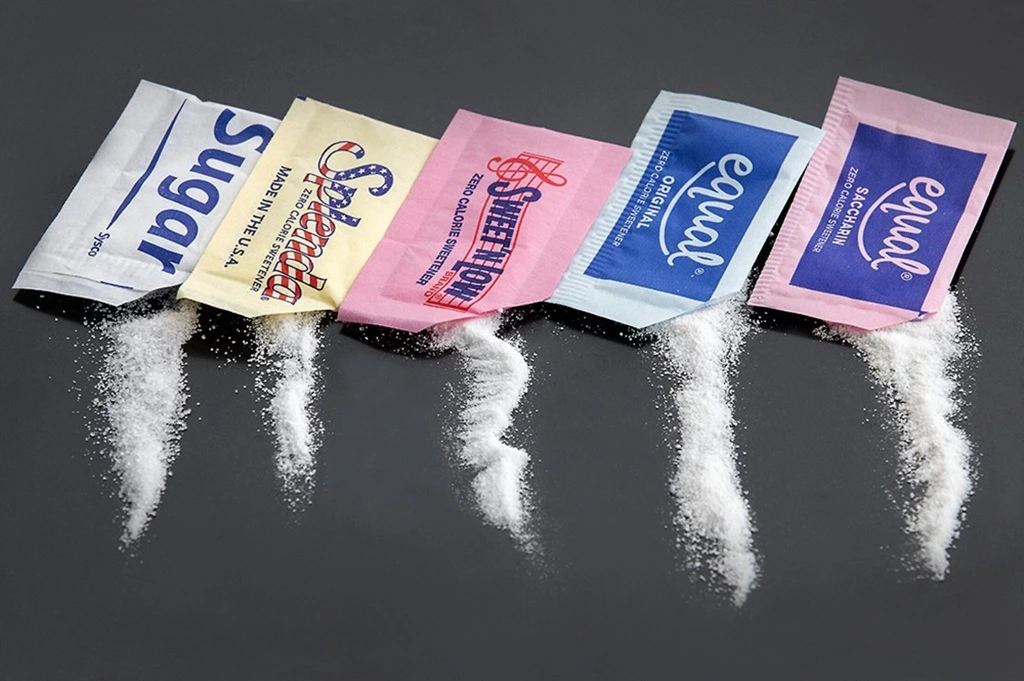
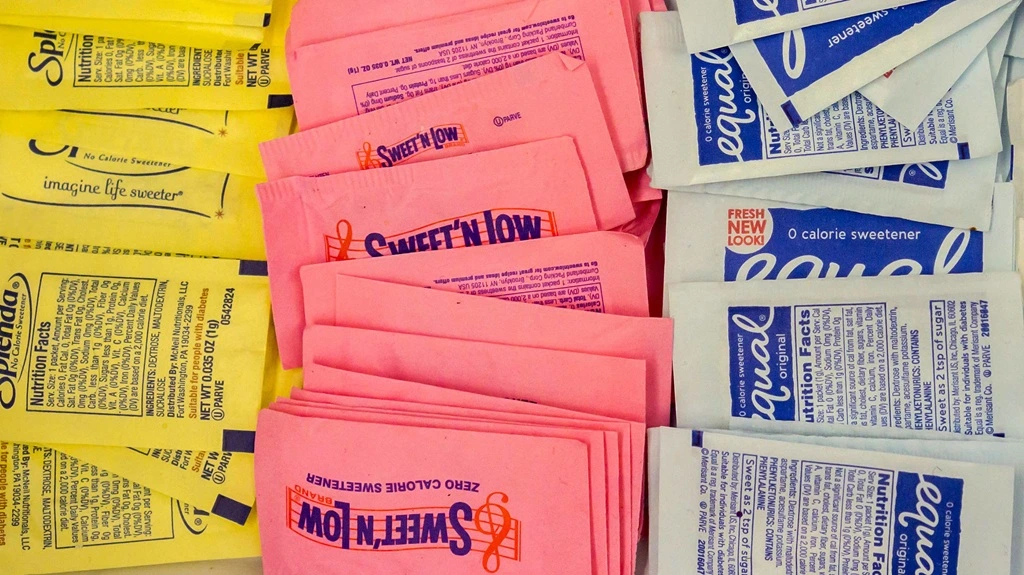
Researchers examined seven low- and no-calorie sweeteners commonly found in products such as diet beverages, yogurt, low-calorie desserts and other processed foods.
The sweeteners included:
- Aspartame
- Saccharin
- Acesulfame K
- Erythritol
- Xylitol
- Sorbitol
- Tagatose
Six of the seven were associated with faster cognitive decline. Tagatose was not associated with cognitive decline in the study.
The findings were particularly notable among participants younger than 60.
What the Researchers Actually Found
Participants were divided into groups according to their reported intake of low- and no-calorie sweeteners.
Compared with people consuming the lowest amounts, those in the middle intake group experienced a faster rate of decline in global cognition and verbal fluency.
The highest-intake group showed an even stronger association, including faster declines in memory, thinking ability and verbal fluency.
The highest consumption category was roughly comparable to the amount of sweetener that might be consumed through a daily diet soda, although the study measured total intake from multiple food and beverage sources rather than simply asking whether someone drank diet soda.
The Study Does Not Prove Artificial Sweeteners Cause Memory Loss
This may be the most important part of the story.
The research was observational. Participants reported their diets, and researchers examined how their cognitive performance changed over time.
That allows scientists to identify relationships, but it cannot establish that consuming artificial sweeteners directly caused the decline.
The researchers themselves acknowledged limitations including self-reported dietary information, participant drop-off during follow-up and the possibility that other lifestyle factors could influence the results.
In other words, the findings are a warning signal—not a final verdict.
Other Factors Could Be Involved
People who consume large amounts of low-calorie sweeteners may differ from people who rarely consume them in many other ways.
They may have different diets, activity levels, metabolic health, weight, diabetes status or patterns of consuming processed foods.
Researchers attempted to account for some of these factors, but no observational study can completely eliminate the possibility of confounding.
That is why additional research is needed before anyone can say that artificial sweeteners themselves are responsible for accelerated brain aging.
Why Could Sweeteners Be Connected to Brain Health?
Scientists don’t yet have a definitive explanation.
One possibility involves the gut microbiome.
The trillions of microorganisms living in the digestive system interact with diet, metabolism and immune function. Researchers are investigating whether certain sweeteners can alter the composition or activity of these microorganisms and whether those changes could influence inflammation or other biological processes.
This is particularly interesting because the gut and brain communicate through a complex network sometimes referred to as the gut-brain axis.
However, it would be premature to say that artificial sweeteners damage the gut and therefore cause cognitive decline. The biological explanation remains an area of ongoing research.
Inflammation Is Another Possibility
Inflammation has been associated with numerous chronic diseases, including conditions affecting the brain.
Researchers have proposed that changes in metabolism, the gut microbiome or inflammatory pathways could potentially play a role in the relationship between sweetener consumption and cognition.
But again, these are proposed mechanisms—not proven explanations for the findings of this particular study.
The Connection Appeared Stronger Among People With Diabetes
The study also found a stronger association between higher sweetener consumption and cognitive decline among participants with diabetes.
This is especially interesting because people with diabetes may be more likely to use low- and no-calorie sweeteners as alternatives to sugar.
Diabetes itself is also associated with changes in metabolic and vascular health that can affect the brain.
That makes it difficult to determine exactly how much of the observed association is related to sweeteners and how much may be related to underlying health conditions.
Does This Mean You Should Stop Drinking Diet Soda?
Not necessarily.
One observational study should not automatically turn a food ingredient into a forbidden substance.
For someone who drinks a diet soda occasionally, these findings do not establish that the beverage will cause memory problems.
However, the research does provide another reason to reconsider consuming large amounts of highly sweetened or artificially sweetened processed foods and drinks every day.
The Bigger Issue May Be Our Dependence on Sweetness
Instead of focusing entirely on whether one particular sweetener is good or bad, it may be more useful to look at the bigger dietary pattern.
If your diet includes diet sodas, artificially sweetened snacks, low-calorie desserts and other highly processed foods throughout the day, simply replacing sugar with a zero-calorie sweetener doesn’t necessarily make the entire diet healthier.
A better long-term goal may be becoming comfortable with foods and drinks that are simply less sweet.
What About Sugar?
There is an important catch here.
The study does not prove that replacing artificial sweeteners with large amounts of added sugar is a healthier strategy.
Excessive added sugar is associated with a number of health concerns, including weight gain and metabolic problems, and high-sugar diets are not considered a reliable strategy for protecting long-term brain health.
So the answer isn’t necessarily to return to sugary beverages.
Try Reducing Sweetness Instead
Rather than replacing one heavily sweetened product with another, consider gradually reducing how much sweetness you consume.
For example:
- Replace some diet soda with water or sparkling water.
- Choose unsweetened coffee or tea when possible.
- Add fruit to plain yogurt instead of using heavily sweetened varieties.
- Reduce the amount of sweetener you add to beverages.
- Choose minimally processed foods more often.
- Build meals around vegetables, legumes, whole grains, nuts, seeds and other nutrient-dense foods.
Your taste preferences can adapt over time.
What About Stevia or Tagatose?
Some people may wonder whether they should simply switch to another sweetener.
The study found no association between tagatose and cognitive decline, but that does not mean the research proves tagatose protects the brain.
Similarly, the study did not test every sweetener available on the market.
Stevia was not one of the seven sweeteners evaluated in this research, so this study cannot tell us whether stevia is safer for cognition.
Consumers should be cautious about turning one study into a definitive ranking of every sugar substitute.
The Brain Benefits From More Than What You Take Out
If your goal is protecting cognitive health as you age, focusing only on artificial sweeteners misses the bigger picture.
Regular physical activity, adequate sleep, a nutrient-rich diet, social engagement and management of cardiovascular risk factors all play important roles in overall health.
Build a Brain-Friendly Eating Pattern
Rather than obsessing over individual ingredients, consider what your diet looks like most of the time.
Foods such as vegetables, fruits, whole grains, beans, nuts, seeds and fish can contribute important nutrients and fiber.
The goal isn’t dietary perfection.
It’s creating a pattern that supports your health over the long term.
The Bottom Line
A major study has raised concerns about a possible connection between higher consumption of several low- and no-calorie sweeteners and faster cognitive decline.
The six sweeteners associated with faster decline were aspartame, saccharin, acesulfame K, erythritol, xylitol and sorbitol. Tagatose was not associated with cognitive decline in the study.
But this research does not prove that these sweeteners cause memory loss or dementia.
For now, the most reasonable takeaway may be moderation rather than panic.
If you’re consuming large amounts of artificially sweetened products every day, reducing your overall dependence on highly sweet foods and drinks may be a sensible step.
Instead of simply asking, What can I use instead of sugar?
A better question may be:
Can I gradually teach myself to need less sweetness altogether?
That shift could be better for your overall diet—and potentially your long-term health—than chasing the next zero-calorie substitute.