

The Menopause Series and the Broken Promises of Healthcare
A Story of Advocacy, Industry Resistance, and the Fight for Women’s Health Written by Charles Mattocks for Ravoke.com I speak about this often, because it continues to trouble me. There

A Story of Advocacy, Industry Resistance, and the Fight for Women’s Health
Written by Charles Mattocks for Ravoke.com
I speak about this often, because it continues to trouble me.
There is a paradox embedded deep within modern healthcare. Many of the largest pharmaceutical and healthcare conglomerates—companies generating billions in annual revenue—seem curiously unaware that the tens of millions they allocate to advertising agencies and marketing firms may be contributing to their reputational erosion. These corporations entrust agencies with the sacred task of positioning their products—pill, potion, or lotion—into the public consciousness. They saturate media channels, sponsor celebrity campaigns, and orchestrate highly curated launches.
And yet, one must ask: is exposure truly their objective?
Or is the real distribution channel far simpler—physicians writing prescriptions, formularies approving coverage, and patients complying with clinical authority? If the prescription pad remains the most powerful marketing instrument, then perhaps public-facing campaigns serve a different function altogether: optics over advocacy, image over infrastructure.
When I approached Bayer regarding participation in our menopause series—coincidentally aligned with the launch of a new therapeutic—I anticipated, at minimum, curiosity. There was no detailed inquiry. No exploration of budget. No request for metrics. No meaningful engagement. A modest financial contribution—merely a few thousand dollars—could have signaled authentic support for millions of women navigating menopause.
Instead, I later observed actress Gabrielle Union positioned as the public face of their campaign. One can reasonably assume such representation is not philanthropic. It is strategic, compensated, and meticulously negotiated.
And so the question becomes unavoidable: What message does this send to the tens of millions of women seeking not celebrity endorsement, but substantive guidance? To women looking for sustained awareness rather than a fleeting promotional cycle?
The Industry’s Bottom Line
I could recount countless examples of the structural resistance embedded within this industry. Ultimately, the gravitational force appears to be the bottom line. Return on investment eclipses return on humanity.
Simultaneously, we witness the emergence of new brands and wellness companies proclaiming empowerment—promising to help individuals reclaim their vitality, circumvent systemic inefficiencies, and redefine what optimal health can look like. Some are sincere. Some are opportunistic. The landscape is crowded and often confusing.
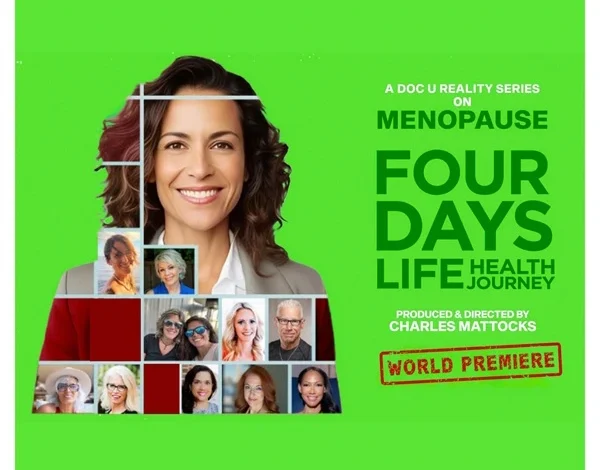
Against this backdrop, we produced the menopause series.
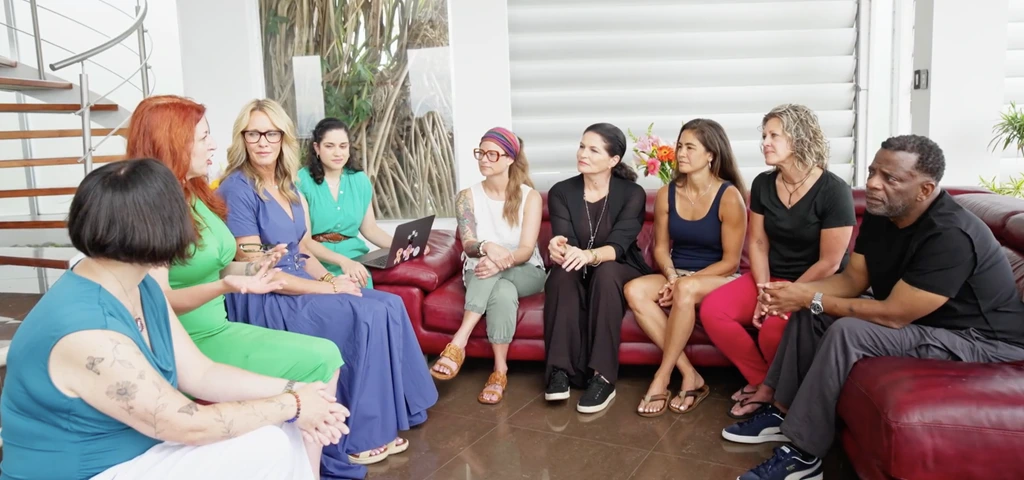
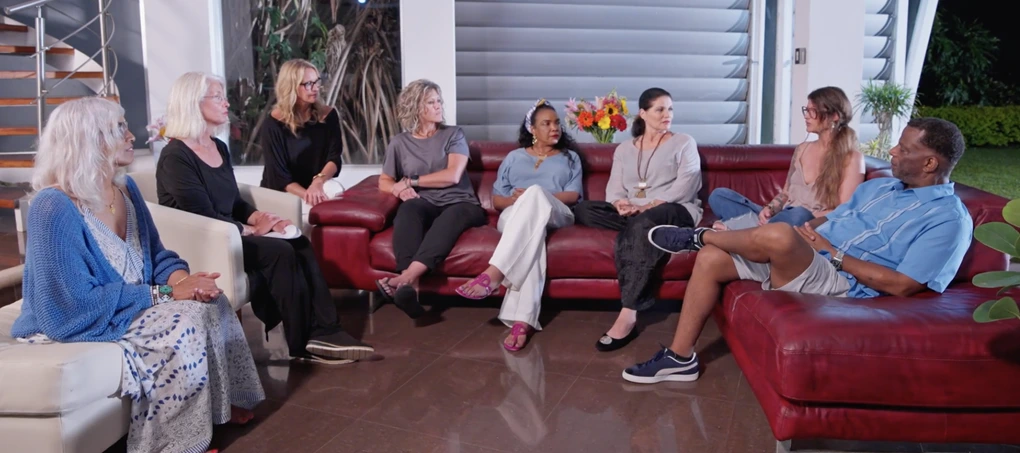
Five women—and one courageous man—traveled to Costa Rica. In a retreat setting, they gathered not merely to film a program, but to confront a life transition too often relegated to whispers. They shared stories. They laughed. They wept. They were educated. They were inspired. Within days, strangers became family. They departed not simply with information, but with hope.
As a filmmaker and advocate, however, I remain haunted by one persistent question: What happens next?
During production, participants received extraordinary guidance from world-class experts. But after the cameras stop rolling, who ensures continuity? Who monitors hormone replacement therapy protocols? Who addresses the emotional fragility that may resurface months later? Who becomes the long-term steward of care?
While the series represents a milestone, it also illuminates a void—an absence of sustained, integrated menopause care for millions of women. The “what’s next” remains profoundly unclear.
Taking the Conversation Global
Over the past several months, I have traveled extensively across the United States, speaking about menopause, healthcare inequities, and the series itself. I journeyed to the United Kingdom to explore the possibility of a UK edition and to meet potential sponsors.
Once again, the hesitation from major brands was palpable.
Securing even modest contributions from multinational corporations—entities ostensibly committed to women’s health—proved daunting. It forces a sobering reflection: perhaps this system, fractured for decades, cannot be recalibrated by one filmmaker, one production company, or one series alone.
My contribution has been the series. My offering has been passion and persistence. But meaningful reform in women’s health will demand collective courage.
Gratitude to the Advocates
This project would not exist without the trust and intellectual rigor of the experts who aligned with the mission—individuals who fight for women’s health every day, independent of media cycles or product launches:
- Dr. Betsy Greenleaf
- Dr. Diana Bitner
- Dr. Sangeeta Pati
- Dr. Cat Brown
- Jill Chmielewski
- Dr. Robert Kiltz
- Hemalayaa Behl
- Jane Durst Pulkys
- Rosie Letts
- Dr. Suruchi Thakore
These are not seasonal advocates. They do not engage only when a pharmaceutical company releases a new device or when a celebrity speaks briefly about symptoms before the spotlight shifts. They are immersed in this work daily.
Beyond Celebrity Cycles
We must normalize menopause within mainstream discourse—not confine it to private social media groups or fragmented online forums. We need men in this conversation. We need boardrooms in this conversation. We need policymakers, insurers, and corporate leaders in this conversation.
Women’s health cannot remain episodic—activated only during marketing cycles or product rollouts. It requires sustained infrastructure, research investment, interdisciplinary collaboration, and cultural recalibration.
The menopause series is not a conclusion. It is an invitation.
An invitation to reexamine how we allocate capital.
An invitation to prioritize continuity of care.
An invitation to replace spectacle with substance.
I am proud of what we created. I am equally aware of how much work remains.
Tune into the new series, coming March 8th international women’s day on Ravoke.com.
Frequently Asked Questions (FAQ)
What is menopause?
Menopause is the natural end of menstrual cycles, diagnosed after 12 months without a period. It usually occurs between ages 45–55.
What is perimenopause?
The transition before menopause when hormones fluctuate, causing symptoms like irregular periods, hot flashes, mood changes, poor sleep, brain fog, and joint pain. It can last several years.
What are common symptoms?
- Hot flashes and night sweats
- Sleep problems
- Mood changes
- Brain fog
- Vaginal dryness
- Low libido
- Joint pain
- Skin and hair changes
Symptoms and severity vary.
What is HRT?
Hormone Replacement Therapy replaces declining hormones (estrogen, sometimes progesterone) to relieve symptoms and support bone health.
Is HRT safe?
For most healthy women under 60 or within 10 years of menopause, HRT is safe and effective when prescribed appropriately. Risks depend on individual health factors.
Are there different types of HRT?
- Estrogen-only (after hysterectomy)
- Combined estrogen + progesterone (if uterus present)
- Systemic (patch, gel, pill)
- Local vaginal estrogen
What are alternatives to HRT?
Lifestyle changes, non-hormonal medications, CBT, vaginal moisturizers/lubricants, and some supplements (with guidance).
Does menopause affect long-term health?
Lower estrogen can impact bone density (osteoporosis risk) and cardiovascular health.
We will continue to push this message. Not in fleeting moments. Not in promotional spurts. But with enduring conviction.
Women deserve more than campaigns. They deserve commitment.
Big thanks to our sponsors: Health & Her, Winona, The Metabolic Kitchen, Sangeeta Pati, Elidah, True Women’s Health, Dr Kiltz, Lumisque