One Man’s Mission for Women’s Health
Why It’s Time to Stop Talking and Start Building a Movement By Charles Mattocks for Ravoke The Journey I Never Expected If you had asked me a few years ago

Why It’s Time to Stop Talking and Start Building a Movement
By Charles Mattocks for Ravoke
The Journey I Never Expected
If you had asked me a few years ago whether I would become deeply involved in women’s health, I probably would have laughed.
It wasn’t a world I had spent my career in. I wasn’t a physician, a researcher, or someone with decades of experience in women’s healthcare. I was a storyteller—someone who believed that powerful conversations could educate, inspire, and change lives.
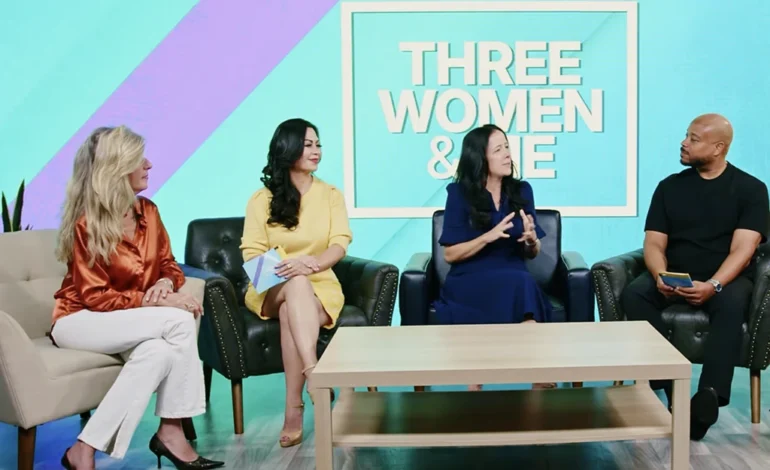
When we began developing Three Women & Me, I thought we were creating a television series.
I had no idea it would become a mission.
Like many men, I knew about menopause. I had heard the word endometriosis. I was familiar with breast cancer awareness and had seen commercials encouraging women to schedule mammograms. But if I’m being truthful, my understanding stopped there.
I didn’t know what millions of women experienced every single day.
I didn’t understand how many spent years searching for answers while being told their symptoms were simply part of getting older.
I didn’t know how often women left doctors’ offices feeling unheard.
I didn’t understand how many silently carried chronic pain while continuing to raise children, care for aging parents, build careers, support partners, and somehow keep moving forward.
Most of all, I didn’t realize how many women felt alone.
That changed the moment I started listening.
Not listening for an interview.
Not listening for television.
Listening because women trusted me enough to tell their stories.
Those conversations changed everything.
I Thought the World Was Ready
When we started producing our menopause series, I believed we were creating something that would resonate across healthcare, media, and corporate America.
The timing seemed perfect.
Women’s health had finally become part of the national conversation. Companies were investing in research. New products were entering the market. Organizations were speaking publicly about breaking stigmas and improving women’s lives.
It felt like the moment many advocates had spent years working toward.
I assumed organizations would embrace the opportunity to educate women in a meaningful way.
I imagined healthcare companies, pharmaceutical leaders, consumer brands, and advocacy organizations working together to create something that could live well beyond a marketing campaign.
Instead, we found ourselves knocking on door after door.
To be fair, some incredible smaller companies stepped forward. They believed in our vision before anyone else did. They understood that education has value even when it doesn’t immediately generate headlines, and their faith helped keep the project moving.
I’ll always be grateful for them.
But I couldn’t stop asking myself the same questions.
Where were the larger brands?
Where were the organizations launching products specifically designed to improve women’s lives?
Where were the companies that proudly positioned themselves as champions of women’s health?
If there was ever a moment to invest in authentic education, wasn’t this it?
The Meeting That Changed My Perspective
One experience continues to stay with me.
One of our medical experts had recently partnered with a major pharmaceutical company. They were introducing a product that aligned perfectly with the conversations we were producing.
The timing couldn’t have been better.
An introduction was made.
The response was encouraging.
“We love your expert.”
“This sounds like a great project.”
For a moment, I thought we had found the right partner.
Then…
Silence.
No follow-up.
No questions.
No conversation about how we could educate women together.
No discussion about creating lasting resources.
No one asking, “How do we make this bigger than a campaign?”
Life simply moved on.
A celebrity was hired.
Television appearances followed.
The marketing campaign came and went.
Millions of dollars were spent promoting awareness.
Yet when the campaign ended, women were still searching for answers.
That moment forced me to rethink what awareness really means.
Awareness is important.
But awareness alone doesn’t change lives.
Education does.
Community does.
Access does.
Trust does.
This Isn’t About Blame
I want to be very clear about something.
This isn’t about criticizing any one company, agency, or individual.
Nor is it a criticism of women working within those organizations.
In fact, it’s quite the opposite.
Throughout this journey, I’ve had the privilege of meeting extraordinary women leading pharmaceutical companies, healthcare organizations, marketing agencies, nonprofit foundations, research institutions, and advocacy groups.
Many are dedicating their lives to improving women’s health.
Many are doing remarkable work.
My point isn’t that people aren’t trying.
My question is whether we’re trying together.
I’ve seen what happens when women unite behind a shared purpose.
Their collective strength is extraordinary.
They build businesses.
Lead research.
Change laws.
Create communities.
Transform lives.
That is precisely why I believe women’s health stands at such an important crossroads.
The expertise already exists.
The passion already exists.
The resources already exist.
Imagine what could happen if more organizations focused less on protecting individual platforms and more on building a shared movement.
Imagine if introductions were made more freely.
If partnerships became the norm instead of the exception.
If success was measured not only by products sold or campaigns launched, but by how many women found answers because people chose to work together.
That possibility continues to inspire me.
Because I don’t believe the biggest obstacle facing women’s health is a lack of intelligence or commitment.
I believe it’s the absence of a truly unified movement.
And it was that realization that led me to the most important part of this journey—not the meetings I attended or the companies I spoke with, but the women who trusted me enough to tell me their stories.
What Women Taught Me
The most valuable education I received over the past few years didn’t come from a conference, a medical journal, or a boardroom.
It came from women.
Every interview, every phone call, every email, every message on social media, and every conversation after filming taught me something I didn’t know before.
At first, I thought we were producing a series about menopause.
I quickly realized we were telling a much bigger story.
Because menopause wasn’t the only conversation women wanted to have.
It was the doorway to hundreds of others.
Women began reaching out from every corner of the world.
Some were navigating menopause.
Others were living with endometriosis.
PCOS.
Adenomyosis.
Autoimmune diseases.
Thyroid disorders.
Fibroids.
Infertility.
Perimenopause.
Hormonal imbalances.
Chronic pain.
Mental health challenges connected to hormonal changes.
Some had finally received a diagnosis after years of searching.
Others were still looking for answers.
Many weren’t managing just one condition.
They were carrying two.
Sometimes three.
Sometimes even more.
Yet every morning they still got up.
They packed lunches.
Went to work.
Ran businesses.
Raised children.
Cared for aging parents.
Supported spouses.
Volunteered in their communities.
Showed up for everyone else.
Even on the days when they barely had enough strength to show up for themselves.
That humbled me.
Beyond the Diagnosis
What surprised me most wasn’t how different their stories were.
It was how similar they sounded.
Again and again, women shared the same frustrations.
“My doctor told me it was normal.”
“I knew something was wrong, but no one listened.”
“I started wondering if it was all in my head.”
“I spent years trying to figure this out by myself.”
Those words stayed with me.
Not because they were dramatic.
Because they were common.
Too common.
No woman should spend years questioning whether her pain is real.
No woman should feel dismissed because a symptom doesn’t fit neatly into a textbook.
No woman should have to become her own full-time researcher simply to understand what is happening to her own body.
Yet for many, that’s exactly what happens.
The more I listened, the more I realized that the biggest burden wasn’t always the diagnosis itself.
It was the loneliness.
Feeling unseen.
Feeling unheard.
Feeling like no one truly understood.
The Experts Taught Me Something Too
One of the greatest privileges of this journey has been sitting across from physicians, researchers, therapists, nutritionists, and healthcare professionals who have dedicated their lives to improving women’s health.
Their knowledge is extraordinary.
But what impressed me most wasn’t simply what they knew.
It was how deeply they cared.
The best experts weren’t interested in delivering rehearsed talking points.
They wanted women to feel empowered.
They wanted patients to understand their bodies.
They wanted healthcare conversations to become more compassionate.
Again and again, I heard the same message.
Women’s health isn’t just about treating symptoms.
It’s about seeing the whole person.
That perspective changed the way I think about healthcare.
Medicine matters.
Research matters.
Innovation matters.
But so does listening.
So does empathy.
So does making someone feel seen.
Sometimes healing begins long before a prescription is written.
Sometimes it begins when someone finally says,
“I believe you.”
The Strength I Didn’t See Before
Before starting this journey, I thought resilience meant pushing through difficult circumstances.
Women taught me something different.
Resilience isn’t pretending everything is fine.
It’s finding the courage to keep moving even when nothing feels fine.
I met women who had built successful careers while privately battling debilitating symptoms.
Women who smiled through meetings after sleepless nights.
Women who attended their children’s events while quietly managing pain no one else could see.
Women who advocated for others while still searching for answers themselves.
Women who refused to let their diagnosis define them.
I also met women who turned their own struggles into purpose.
They started nonprofits.
Created support groups.
Built businesses.
Wrote books.
Launched podcasts.
Mentored other women.
Raised millions of dollars for research.
Opened doors they wished someone had opened for them.
They reminded me that some of the strongest leaders aren’t the ones standing on stages.
They’re the ones quietly changing lives every single day.
The Lesson That Changed Everything
If you asked me today what women taught me, my answer wouldn’t be menopause.
Or hormones.
Or medicine.
They taught me something much bigger.
They taught me that being heard can be just as powerful as being treated.
That knowledge should be shared, not protected.
That compassion should never be considered a weakness.
And that community has the power to change lives in ways no marketing campaign ever could.
Those conversations changed how I viewed healthcare.
They changed how I viewed leadership.
And they changed how I viewed my own role in this work.
I stopped thinking about producing a television show.
I started thinking about building a place where women could find trusted experts, honest conversations, meaningful resources, and, perhaps most importantly, one another.
Because after hearing hundreds of stories, one truth became impossible to ignore.
Women don’t need another awareness campaign that disappears after a few weeks.
They need a community that shows up every single day.
That realization became the foundation of everything we’re building.
This Mission Became Personal
People often ask why I care so deeply.
The answer is simple.
Once you’ve listened to enough women share years of pain, frustration, resilience, and hope, you can’t pretend you didn’t hear them.
Those stories stay with you.
They certainly stayed with me.
What began as a television project became something much more meaningful.
A mission to help create a trusted place where women feel heard, experts feel valued, and important conversations continue long after the cameras stop rolling.
The Vision
Three Women & Me was never meant to be just another talk show.
Our vision is to build a community.
A place where trusted experts educate with honesty.
Where women’s lived experiences are valued alongside medical expertise.
Where partnerships matter more than competition.
Where conferences inspire action.
Where meaningful resources are developed with integrity.
Where women know they have somewhere to turn—not just for information, but for understanding.
If we can introduce one woman to an expert who changes her life, we’ve made progress.
If we can connect organizations that create greater impact together than they ever could alone, we’ve made progress.
If we can encourage more men to become allies, we’ve made progress.
That’s the future we’re working toward.
Join the Movement
Women’s health deserves more than awareness campaigns that disappear after a few weeks.
It deserves lasting commitment.
It deserves collaboration.
It deserves education rooted in compassion.
Most of all, it deserves a community where every woman knows she is seen, heard, and supported.
The women I’ve met have taught me more than I could have imagined.
They’ve taught me about resilience.
About courage.
About perseverance.
And about the extraordinary things that happen when people come together with a shared purpose.
Those lessons changed me.
I hope they inspire others, too.
Because this isn’t just about building a television show.
It’s about helping build a movement that lasts.
For more information visit: https://threewomenandme.com/