

How Food Helped Me Through Breast Cancer and Induced Menopause
Written by Fiona Staunton for ravoke.com When breast cancer treatment pushed me into induced menopause, I found myself dealing with a whole new set of challenges. I’m sharing how food

Written by Fiona Staunton for ravoke.com
When breast cancer treatment pushed me into induced menopause, I found myself dealing with a whole new set of challenges. I’m sharing how food helped me manage symptoms, rebuild my strength and find a new sense of purpose.
Food has always meant far more to me than what is on the plate. It has always been my way of looking after people — bringing comfort, nourishment and a little calm to everyday life. But when I was diagnosed with oestrogen-positive breast cancer in 2020, food took on an entirely new meaning. It became part of how I coped, how I rebuilt, and how I found my way through one of the hardest chapters of my life.
According to the World Health Organization, breast cancer is now the most commonly diagnosed cancer worldwide, with more than 2.3 million new cases diagnosed each year. For many women, treatment can also trigger early or induced menopause, adding another complex layer to recovery.
A Diagnosis During a Pandemic
As a Ballymaloe-trained chef and founder of Fiona’s Food for Life, I had already spent years helping others cook well and feel better through simple, wholesome food. Then, during a particularly stressful time, I noticed that one breast seemed fuller than the other. It reminded me of breastfeeding days, when I would be so tired I could barely remember which side I had started feeding from and had to check them both!. I mentioned it to my GP, who wasn’t overly concerned, but sent me for a mammogram just to be safe.
Then, just before the appointment, I noticed nipple discharge and knew in my gut that something wasn’t right. Further tests revealed a number of small tumours, and I underwent a mastectomy. Thankfully, the cancer had been caught early and had not spread. This all happened during the pandemic, and I spent a lonely week in the hospital.
But that was only one part of the story.
The Shock of Induced Menopause
Because my cancer was hormone-sensitive, the treatment that followed brought another enormous challenge: medically induced menopause. There was no gentle transition, no easing into it. Instead, it arrived suddenly and intensely. I have often described it as feeling like falling off a cliff, because that is exactly what it felt like.
One minute I was recovering from breast cancer, and the next I was dealing with aching joints, insomnia, brain fog, deep fatigue and relentless hormone headaches. It was a huge shock, both physically and emotionally.
What made it even harder was the lack of practical support for this part of the journey. Cancer treatment is rightly taken very seriously, but the menopause that can follow — especially when it comes on overnight — can leave women feeling completely thrown off balance. I found myself trying to make sense of a body that suddenly felt unfamiliar. Because hormone replacement therapy was not an option for me, I had to find other ways to support myself through it.
Turning Back to Food
That is where food came back in, but in a very different way than before.
Not as a cure, and not as some perfect wellness plan, but as a practical support I could turn to every single day. I began looking much more closely at the foods I was eating and how they made me feel. I focused on ingredients that could support me through menopause naturally — foods rich in fibre, protein, healthy fats and phytoestrogens.
Flaxseeds, lentils, soy, edamame and miso became regular features in my kitchen, not because they were fashionable, but because they were simple, nourishing and genuinely helpful.
What food gave me, above all, was a sense of control again.
When your body changes so suddenly, it can be hard to feel like yourself. Cooking helped me feel grounded. It brought structure back to my day. It gave me something steady to return to when everything else felt uncertain.
A nourishing breakfast, a balanced lunch, a pot of soup on the go, a proper family dinner made from scratch — these things might seem small, but during difficult times they can be powerful. They became part of how I cared for myself, rebuilt my strength and slowly began to feel more like myself again.
How It Changed My Work
That experience ultimately changed the direction of my work too.
What began as a personal search for relief became something much bigger. I realised that so many women were crying out for practical, realistic support around perimenopause and menopause — and especially women dealing with menopause after cancer.
Research suggests that up to 80% of women experience menopausal symptoms, and for those with treatment-induced menopause, symptoms can often be more sudden and intense. Yet many women report feeling underprepared for this stage of recovery.
There was plenty of noise, plenty of confusion, and far too much overwhelm. What women really needed, I felt, was food that made sense: straightforward meals, easy ideas and clear guidance that could fit into busy family life.
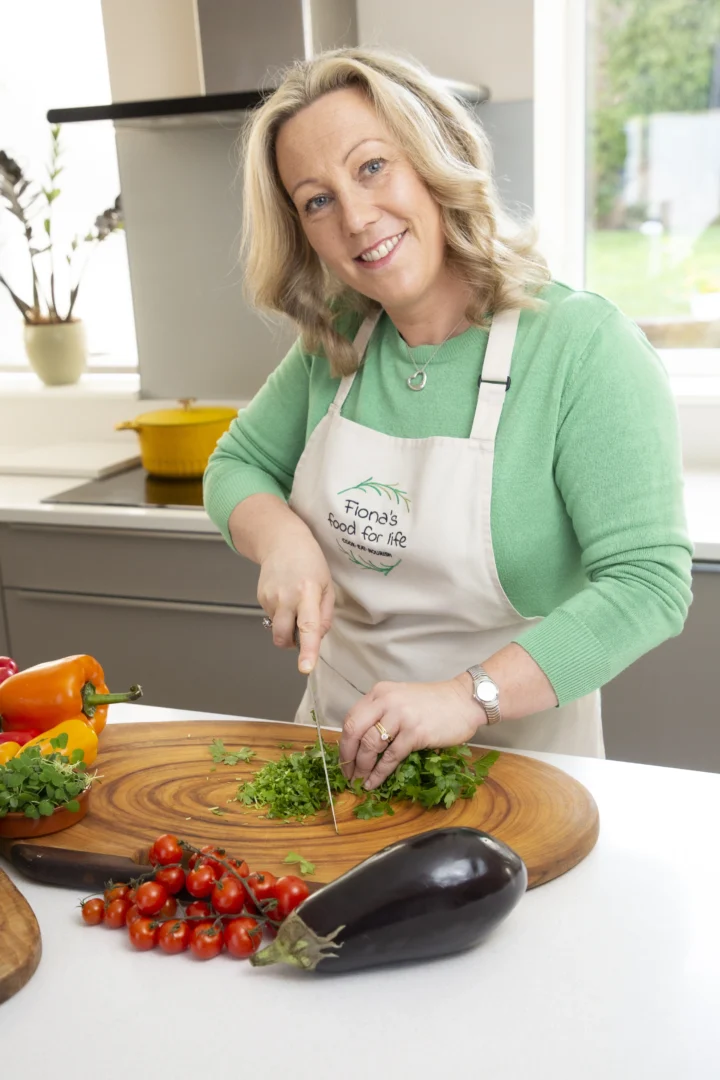
That belief is now at the heart of Fiona’s Food for Life. Through my work, I help women understand how food can support energy, mood, brain health and overall wellbeing during midlife. My approach is warm, grounded and realistic. It is not about perfection. It is about making small, manageable changes that can genuinely help women feel better.
Lived Experience, Not Just Theory
What makes this work so meaningful to me is that it comes from lived experience as much as professional knowledge. I am not speaking from the outside looking in.
I know what it is to have life interrupted by illness, to be pushed into menopause overnight, and to feel overwhelmed by symptoms that few people fully understand unless they have been through them. I also know how important it is to feel empowered again — and how something as ordinary as making a good meal can be the start of that.
Today, I share my story in the hope that it helps other women feel less alone. My journey is one of resilience, reinvention and hope, but also one of honesty. There were hard days, confusing days and days when I did not feel like myself at all.
But it also taught me that healing does not always begin with one dramatic change. Sometimes it begins quietly, in the everyday choices we make to nourish and care for ourselves.
Food did not just help me through breast cancer and induced menopause. It helped me find strength in the middle of it, and purpose on the other side. Through Fiona’s Food for Life, I now hope to help other women do the same.
My Top Tips for Other Women
If I could share a few things with other women going through breast cancer, induced menopause, or any difficult health chapter, these would be my top tips:
Check your breasts regularly
Trust yourself and pay attention to any changes, even if they seem small.
Keep track of your menopause symptoms
Writing things down can help you spot patterns and explain more clearly what is going on.
Get medical advice early
If something does not feel right, do not ignore it.
Plan your meals where you can
Having nourishing food ready makes it much easier to look after yourself on busy or low-energy days.
Carry snacks with you
A simple, balanced snack can make a big difference to your energy and mood.
Focus on whole foods
Simple, nourishing ingredients can really help support your body.
Talk to other women
Everyone’s experience is different, but sharing and listening can help you feel less alone.
Be kind to yourself
You do not have to do everything perfectly.
Make time to pause
Meditation, breathing, or even a few quiet minutes can help calm your mind.
Keep active if you can
Gentle movement can support both your body and your mood.
FAQ‘s
Can breast cancer treatment cause menopause?
Yes. Some breast cancer treatments, particularly those used for hormone-sensitive cancers, can trigger medically induced menopause. This can happen suddenly and symptoms may feel more intense than natural menopause.
Can food help with menopause symptoms?
Food is not a cure, but a balanced diet rich in fibre, protein, healthy fats and phytoestrogens may help support energy, mood and overall wellbeing during menopause.
What are phytoestrogens?
Phytoestrogens are naturally occurring plant compounds found in foods such as flaxseeds, lentils and soy. They have a mild oestrogen-like effect in the body and may help support women during menopause.
Above all, remember that there is no one “right” way through any of this. We are all different, and what helps one woman may not help another. The most important thing is to stay curious, get support, and be gentle with yourself as you find what works for you. For more information visit: www.fionasfoodforlife.ie