




Vaseline: What We Grew Up Using—and What We Should Know Now
Written by Ravoke News desk The other day, as I was dropping my daughter off at school, I asked her if she had any lip balm I could borrow. She


Written by Ravoke News desk
The other day, as I was dropping my daughter off at school, I asked her if she had any lip balm I could borrow. She reached into her bag and pulled out a giant tub of Vaseline. I couldn’t help but laugh—but it also stopped me in my tracks.
Most of us grew up on Vaseline. It was always there. We knew it could do almost 20 different jobs. I’ve used it on my skin. Some people swear by it for their lips. Others use it on their hair, for burns, for diaper rash, and the list just keeps going. I even remember using it once to oil a squeaky door.
I’d honestly love to know how many uses you’ve found for Vaseline over the years. But as familiar as it is, how many of us have ever really stopped to think about what it is, where it comes from, and what the potential dangers might be?
Here’s some information you may want to know.
Where Petroleum Jelly Came From
A 150-Year-Old Invention
More than 150 years ago, petroleum jelly was created. At the time, a chemist was working on clarifying kerosene from the oil of killed sperm whales. During that work, he noticed something interesting—thick, black, gooey oil seeping up from a newly discovered oil well near where he lived.
Instead of discarding it, he saw an opportunity.
That black oil was refined again and again until it became a clear, gel-like substance. That substance is what we now know as Vaseline.
What Is Vaseline, Exactly?
The Chemical Breakdown
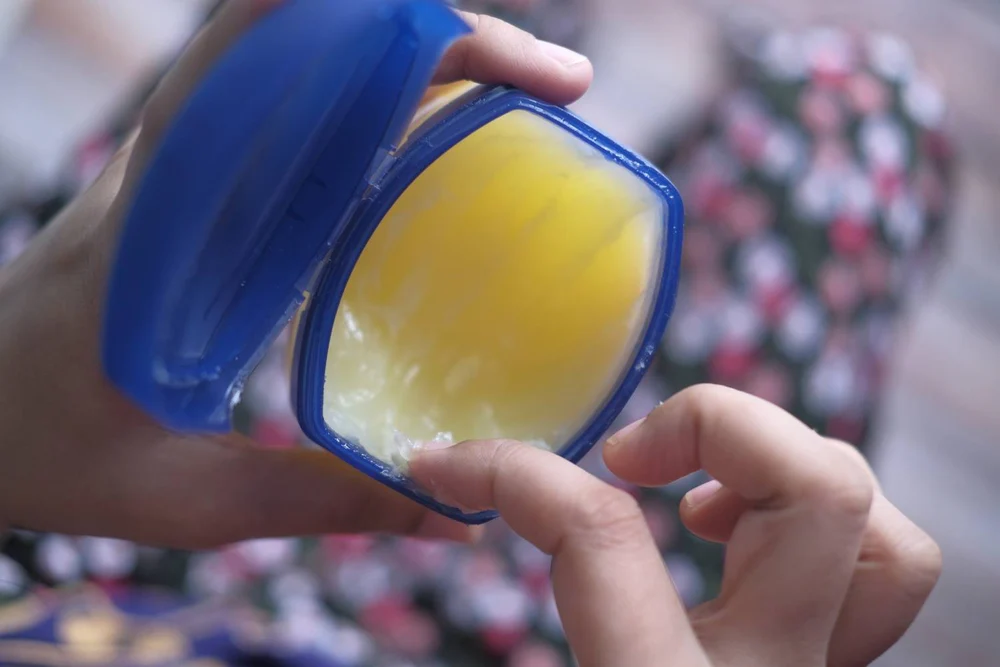
Vaseline is 100% pure petroleum jelly.
Petroleum jelly is, chemically speaking, a mixture of hydrocarbons. It’s a direct byproduct of the same oil we use in our cars, our homes, and industrial machinery.
Clearly, this is not a sustainable product—and it’s not something we can grow naturally.
How Vaseline Is Commonly Used
Why It Became a Household Staple
For many years, Vaseline has been used to:
- Treat various skin conditions
- Aid in wound healing
- Protect dry and chapped skin
- Prevent and soothe diaper rash
But what isn’t as widely known are the potential side effects associated with its use.
Health Risks and Concerns
What Studies Have Raised Questions About
Some of the reported side effects of using petroleum jelly include:
- Allergic reactions
- Infections
- Clogged pores
- Hydrocarbon exposure
Petroleum jelly carries a high risk of contamination from polycyclic aromatic hydrocarbons (PAHs)—chemicals that have been linked to certain cancers.
Because of this risk, the European Union restricts the use of petroleum in cosmetics and has set strict PAH limits.
This is not the case in the United States.
Bacteria, Lips, and Lungs
According to studies, 40% of users who apply Vaseline to their lips or use it as a lubricant have tested positive for bacterial contamination.
Another concern is inhalation. In a small percentage of individuals, inhaling petroleum particles has reportedly led to lung irritation and infections.
What to Avoid on Ingredient Labels
Red Flags to Watch For
If you’re trying to avoid petroleum-based products, steer clear of ingredients such as:
- Anything labeled petroleum or petrolatum
- Mineral oil
- Paraffin wax
- Naphtha / naphthalene
Non-regulated products and imitators may use varying grades of purity, which adds another layer of concern.
Environmental Risks and Concerns
Beyond Personal Health
petroleum is a byproduct of oil extraction and refining, making it non-renewable.
When washed down drains, petroleum can enter the environment. It may also be released from cooling liquids used in refrigerators, oil-based heaters, hydraulic fluids, motor oil, and brake fluids. While wastewater treatment plants can remove it, the refining process itself releases PAHs.
In the environment, these compounds have been shown to negatively affect fish, marine vertebrates, and seafloor organisms.
While the Government of Canada states petroleum does not pose an immediate environmental threat, its long-term ecological footprint remains a concern.
What to Use Instead
Safer, Natural Alternatives
Not only is petroleum potentially harmful to human health, but it also impacts the environment. Fortunately, there are plant-based alternatives that provide similar texture and protection—without the risks.
Look for ingredients such as:
- Shea butter
- Mango butter
- Beeswax
- Coconut oil
- Cocoa butter
- Avocado oil
These natural balms and salves moisturize, protect, and heal without trapping bacteria or relying on fossil fuels.
FAQ: Vaseline and Petroleum Jelly
Does Vaseline actually moisturize skin?
Vaseline seals moisture in but does not hydrate the skin. It acts as a barrier, not a nourishing moisturizer.
Why does the EU restrict petroleum use?
Due to concerns over PAH contamination and unknown refining histories.
Can petroleum jelly clog pores?
Yes. It can trap oil, bacteria, and debris beneath the skin.
Are natural alternatives as effective?
Yes. Many offer superior healing and moisturizing benefits without the side effects.
Is petroleum renewable?
No. It is a byproduct of oil extraction and cannot be sustainably replenished.
Thoughts
Vaseline has been part of our lives for generations, and that familiarity makes it easy not to question. But knowing where it comes from, what it’s made of, and how it affects both our bodies and the planet gives us the power to make better choices. Sometimes, the most important step is simply asking the question we never thought to ask.