


Beyond the Decline: The Clinical Case for Growth Hormone Resurgence
How Selective Peptide Signaling Is Redefining the Physiological Ceiling of Aging Written by Bryan J Treacy MD for ravoke.com The story of human aging has often been told as an
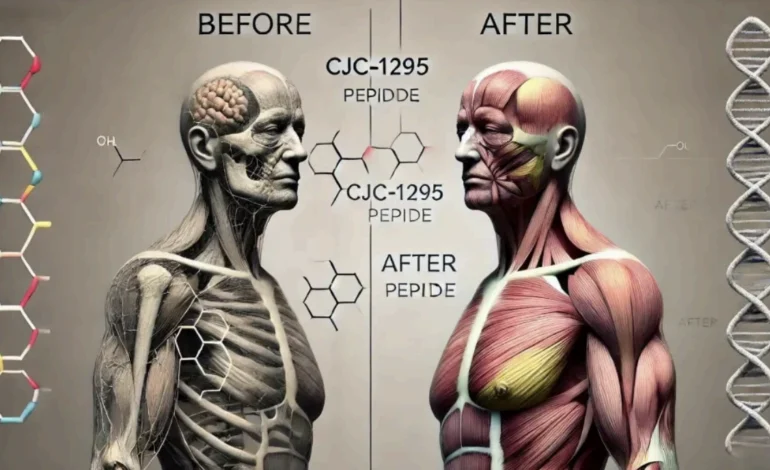

How Selective Peptide Signaling Is Redefining the Physiological Ceiling of Aging
Written by Bryan J Treacy MD for ravoke.com
The story of human aging has often been told as an unstoppable downhill slide.
Once we hit our 40s and 50s, the repair systems that kept us strong in our 20s and
30s start to fade. In my three decades as a physician and functional health coach,
I’ve seen that the biggest change isn’t only the drop in sex hormones like
testosterone or estrogen. It’s the quiet fading of the body’s master repair signal:
growth hormone (GH).
What Growth Hormone Actually Does
GH is a protein made by the pituitary gland (a small “master gland” at the base of
the brain). In children it drives height. In adults it keeps muscles firm, burns belly
fat, speeds recovery from exercise or injury, supports deep sleep, and helps every
cell repair itself. It works mostly through another substance it triggers called IGF-1
(insulin-like growth factor-1), which travels in the blood and tells tissues to rebuild.
The Somatopause Crisis
Around age 40–50, most people experience somatopause—the natural, gradual
decline in GH and IGF-1 levels. Studies show GH secretion can drop 50–70% by age
60. The result?
- Sarcopenia (loss of muscle mass and strength)
- Central adiposity (stubborn fat around the waist)
- Slower recovery after workouts or injuries
- Poorer sleep quality and lower energy
Many active adults simply accept these changes as “normal aging.” But they don’t
have to be inevitable.
The Problem with Traditional Growth Hormone Replacement
For decades, doctors prescribed synthetic GH injections (called GHRT). These
deliver GH directly into the bloodstream. The problem is simple: your body senses
the constant high levels and says, “We already have plenty—shut down production.”
This is the negative feedback loop in action. The pituitary gland stops making its
own GH, and the natural daily pulses disappear. Side effects can include joint pain,
swelling, insulin resistance, and even higher risk of certain issues with long-term
use. You trade one problem for another.
Enter CJC-1295: The Elegant Nudge
Peptide therapy works differently—it speaks the body’s own language. CJC-1295 is
a lab-made copy (analog) of GHRH (growth hormone-releasing hormone), the
natural signal your hypothalamus sends to the pituitary to say, “Release GH now.”
Unlike regular GHRH, which lasts only minutes in the blood, CJC-1295 has been
modified so it lasts days. There are two common forms:
- With DAC (Drug Affinity Complex): binds to a blood protein called albumin
and lasts about 6–8 days—often given once a week. - Without DAC (also called Modified GRF 1-29): shorter-acting, more closely
mimics natural short pulses—usually given nightly.
A landmark 2006 study in The Journal of Clinical Endocrinology & Metabolism
showed that a single dose of CJC-1295 raised GH levels 2- to 10-fold for more than
6 days and IGF-1 levels 1.5- to 3-fold for 9–11 days, with no serious side effects in
healthy adults.

Why This Approach Is Safer and Smarter: Physiologic Negative Feedback
Here’s the beautiful part. CJC-1295 does not flood the body with outside GH. It
simply gives the pituitary a stronger, longer-lasting “go” signal. Your body’s built-in
negative feedback loops stay fully active:
- When IGF-1 rises, it signals the brain and pituitary to slow down.
- The hypothalamus still releases somatostatin (the natural “brake” hormone)
in rhythmic pulses.
Because these brakes still work, GH continues to be released in natural
pulses—especially big ones during deep sleep—just like when you were younger.
The same 2006 study proved this: even with continuous stimulation from CJC-1295,
the frequency and size of GH pulses stayed exactly the same. Only the baseline
(trough) levels rose, so the overall daily GH exposure increased without losing the
healthy rhythm your body prefers.
In contrast, injected synthetic GH bypasses the pituitary entirely and turns the
feedback loops off. CJC-1295 works with your physiology instead of against it.
The Clinical Advantages
- Preserved Pulsatility → Deep-sleep GH bursts remain strong, supporting
repair, fat burning, and mental clarity. - Metabolic Resilience → Higher IGF-1 promotes muscle protein synthesis
and lipolysis (fat breakdown) without the insulin-resistance risks of synthetic
GH. - No Shutdown of Natural Production → Your pituitary keeps working and
may even become more responsive over time.
The Holistic Foundation (Peptides Are Force Multipliers, Not Magic)
CJC-1295 works best when you give your body the right stage:
- Circadian precision: Avoid eating within 2–3 hours of bedtime. Late-night
carbs raise insulin, which blocks GH release. - Sleep environment: Keep the bedroom cool (around 65–68°F / 18°C) and
completely dark—GH pulses love this setting. - Resistance training: Heavy lifting or body-weight training creates the
mechanical signals that tell the extra GH to build muscle and bone. - Nutrition: Adequate protein, healthy fats, and micronutrients (especially
zinc and magnesium) support the whole axis.
Final Thoughts
We are leaving behind the old “replacement” mindset and moving into true
optimization. CJC-1295 is a targeted tool that gently raises your own growth
hormone output while respecting every natural feedback loop your body already
has. It doesn’t fight the clock—it recalibrates the biological machinery so it runs like
a much younger system.
That said, if you ask your regular doctor about this, you might hear something like,
“We don’t do that—it’s not FDA approved.” That response is common and
understandable. Most physicians aren’t trained in functional medicine or
age-management principles, where peptides like CJC-1295 are viewed as
physiologic optimizers rather than replacements. CJC-1295 itself isn’t FDA-approved
as a mass-market drug for these uses; it’s individually compounded by specialized
pharmacies, which is why it’s never covered by insurance. (As I often say: “If it’s
covered by your health insurance, you probably shouldn’t do it—and if it’s not
covered, it’s usually what you need.”)
The good news? You don’t have to navigate this alone. Through Health Without
Risk, I can connect interested readers with experienced telehealth prescribers who
are well-versed in peptides, longevity, and safe, monitored use. These providers are
available in all 50 states and focus on personalized, evidence-informed approaches.
If you’re over 40, staying active, and tired of accepting slower recovery or creeping
metabolic changes as “just aging,” and you’d like to learn more or explore whether
this option might fit your health goals, reach out to us. Simply email me directly at
bryanjtreacymd@healthwithoutrisk.com. We’ll be happy to answer questions,
discuss next steps, and help you decide if it’s right for you.
As always, peptides are powerful tools and should only be used under proper
medical supervision with monitoring of labs like IGF-1, blood sugar, and other
markers.
The future of age management isn’t about flooding the body with hormones—it’s
about smartly turning up the volume on the ones you already make.
frequently asked questions
What is somatopause?
Somatopause is the natural, age-related decline in growth hormone (GH) and IGF-1
levels that typically begin between ages 40–50.
How is CJC-1295 different from synthetic GH injections?
Synthetic GH injections deliver growth hormone directly and can suppress natural
production. CJC-1295 stimulates your body’s own GH release while preserving
natural feedback loops and pulsatile rhythm.
Is CJC-1295 FDA approved?
CJC-1295 is not FDA-approved as a mass-market drug for anti-aging or
optimization purposes. It is compounded by specialized pharmacies and requires
medical supervision.
Who should consider learning more about peptide therapy?
Adults over 40 who are active and experiencing slower recovery, reduced muscle
mass, increased central fat, or declining energy may wish to explore whether
peptide therapy aligns with their health goals under qualified medical guidance.