



Could a Simple Blood Test Change the Future of Alzheimer’s? For Families Like Mine, It Offers Something We’ve Been Missing—Time
By Ravoke News Desk Dementia Has Been on My Mind More Than I’d Like to Admit I’ll be honest. Dementia scares me. Not because I’ve been diagnosed with anything, but

By Ravoke News Desk
Dementia Has Been on My Mind More Than I’d Like to Admit
I’ll be honest.
Dementia scares me.
Not because I’ve been diagnosed with anything, but because it runs in my family.
When you’ve watched someone you love slowly lose pieces of themselves, it changes the way you think about your own future.
Every now and then, I’ll walk into a room and completely forget why I went there. I’ll spend ten minutes searching for my car keys only to find them sitting exactly where I swore I had already looked. Sometimes I’ll misplace my reading glasses while they’re resting on top of my head.
Deep down, I know these little moments happen to almost everyone.
Stress, lack of sleep, aging, and simply having too much on our minds can make us forgetful.
Still…
When dementia has touched your family, those ordinary lapses have a way of planting extraordinary fears.
You begin asking yourself questions you wish you never had to ask.
“Is this normal?”
“Am I becoming like my mother? My father? My grandmother?”
Most of the time, the answer is no.
But the worry remains.
That’s why a new study about a simple blood test capable of predicting Alzheimer’s risk years before symptoms appear immediately caught my attention.
Not because it promises a cure.
Because it promises something almost as valuable.
Knowledge.
A Blood Test That May See Trouble Before Memory Fades
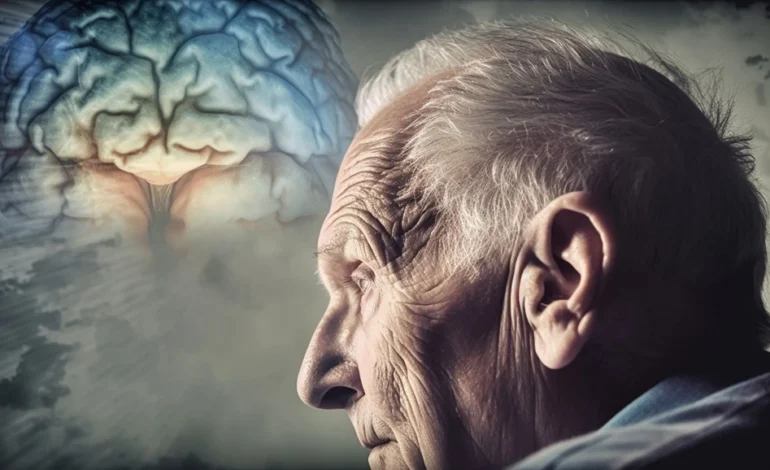
Researchers at Harvard Medical School have unveiled findings that could reshape how doctors identify Alzheimer’s disease long before the first noticeable signs appear.
Instead of waiting until someone begins forgetting names, repeating stories, or struggling with everyday tasks, scientists believe a routine blood test may be able to identify people who are at much higher risk years—even a decade—before cognitive decline becomes obvious.
The research followed nearly 2,700 older adults, all of whom were mentally healthy when the study began.
Scientists measured levels of a protein in their blood called p-tau217, a biomarker closely linked to the abnormal brain changes seen in Alzheimer’s disease.
Over the next several years, the pattern became difficult to ignore.
Individuals with the highest levels of this protein were far more likely to develop cognitive impairment than those with lower levels.
Researchers estimate that people with elevated p-tau217 faced roughly a 78% chance of developing cognitive impairment within ten years, while their five-year risk was approximately one in three.
Those are significant numbers.
But it’s equally important to understand what they do—and don’t—mean.
This Isn’t a Crystal Ball
One thing the researchers emphasized is that this blood test is not a diagnosis.
A high result doesn’t guarantee someone will develop Alzheimer’s disease.
Likewise, a low result doesn’t provide complete immunity.
Age, genetics, overall health, kidney function, and even ethnicity can influence dementia risk.
Instead, think of the test the same way doctors think about cholesterol.
High cholesterol doesn’t mean a heart attack is inevitable.
It means your risk is higher, allowing doctors and patients to make informed decisions long before a medical crisis occurs.
That may ultimately become the greatest value of this new test.
Why Early Detection Could Change Everything
For decades, Alzheimer’s disease has largely been diagnosed after memory loss begins.
Unfortunately, by that point, the brain has often been changing silently for years.
Scientists now believe abnormal proteins can begin accumulating 15 to 20 years before symptoms become obvious.
Imagine discovering heart disease only after suffering a major heart attack.
That’s essentially where Alzheimer’s medicine has been for many years.
Researchers are now trying to move the starting line much earlier.
If doctors know who is at greatest risk, future treatments may be started before irreversible damage occurs.
That’s where many experts believe the greatest opportunity exists.
Why This Hits Home for So Many Families
Anyone who has cared for someone with dementia understands that memory loss is only one chapter of the story.
The disease changes families.
It changes marriages.
It changes children.
It changes lives.
At first, the changes can be almost invisible.
A missed appointment.
The same question repeated three times in one afternoon.
Getting lost while driving a familiar route.
Bills that suddenly go unpaid.
Names that refuse to come to mind.
As months and years pass, those small moments gradually become something much larger.
Loved ones begin needing reminders for everyday tasks.
Simple conversations become difficult.
Familiar faces become unfamiliar.
Eventually, some people no longer recognize the very family members who have stood beside them through everything.
That may be one of dementia’s cruelest realities.
The person is still physically present.
But pieces of who they were slowly disappear.
Why I Believe It’s Better to Know

Some people have said they wouldn’t want to take a blood test like this.
“If there’s no cure,” they ask, “why would I want to know?”
I understand that point of view.
But personally…
I’d rather know.
Knowing doesn’t mean living in fear.
It means having options.
If I learned that I carried a higher risk, I’d have conversations with my family while I still could.
I’d organize financial documents.
I’d make legal decisions.
I’d write down family stories I’d never want forgotten.
I’d travel while I was healthy enough to enjoy it.
I’d spend even more time with the people I love.
Most importantly, I’d work with my physician to do everything science currently suggests might reduce my risk or slow progression.
Knowledge isn’t the enemy.
Sometimes uncertainty is.
Can Anything Actually Lower the Risk?
This is the encouraging part of the conversation.
While there is still no cure for Alzheimer’s disease, research continues to show that lifestyle choices may influence brain health.
Doctors frequently recommend:
- Staying physically active through regular exercise.
- Managing blood pressure, cholesterol, and diabetes.
- Eating a heart-healthy diet rich in vegetables, fish, whole grains, and healthy fats.
- Getting quality sleep.
- Remaining socially engaged.
- Challenging the brain through reading, puzzles, music, or learning new skills.
- Treating hearing loss when appropriate.
- Avoiding smoking and limiting excessive alcohol consumption.
None of these guarantee protection.
But together, they appear to support healthier brain aging.
For someone with a family history like mine, that’s empowering.
There are things we can do today instead of simply worrying about tomorrow.
The Future May Include Earlier Treatments
One reason this research is generating so much excitement is because medicine is beginning to shift toward treating Alzheimer’s earlier than ever before.
Several newer therapies are designed to slow the buildup of amyloid proteins in the brain during the earliest stages of disease.
While they are not cures, they represent a major step forward after decades with very few treatment options.
If doctors can identify high-risk individuals years before symptoms begin, future medications could potentially be started earlier—when they have the greatest chance of making a meaningful difference.
This blood test could also make it easier to identify volunteers for clinical trials, accelerating the development of even better therapies.
We Should Be Hopeful—But Also Patient
As promising as these findings are, the research is still evolving.
Scientists caution that larger studies involving more diverse populations will be needed before the test becomes a routine part of annual medical care.
The blood test should be viewed as one piece of a much larger puzzle rather than a standalone answer.
Doctors will still consider family history, genetics, medical conditions, brain imaging, and cognitive evaluations when assessing someone’s overall risk.
That’s how good medicine works.
Rarely does one test tell the entire story.
Some Thoughts
I’ll probably still lose my keys from time to time.
I’ll still walk into rooms wondering why I went there.
And yes, because of my family’s history, those moments may always make me pause for a second longer than most people.
But reading about research like this gives me something I haven’t always felt when it comes to Alzheimer’s disease.
Hope.
Not false hope.
Scientific hope.
For generations, families have often learned about Alzheimer’s only after memory had already begun slipping away.
If a simple blood test can someday identify people years earlier—and give doctors the opportunity to monitor, intervene, or even slow the disease before it steals precious memories—that would represent one of the biggest advances in dementia care we’ve seen.
I’ve always believed it’s better to know than not know.
Knowing gives us choices.
Knowing gives researchers time to help.
Knowing gives families time to prepare.
And perhaps most importantly, knowing gives us a chance to fight back before the disease quietly takes the lead.
For millions of families living under the shadow of Alzheimer’s, that possibility may be one of the most hopeful developments in decades.