





Sickle Cell Disease: The Silent Crisis Millions Are Living With
By Charles Mattocks – Ravoke.com For millions of people across the globe, life begins with an invisible battle already written into their DNA. It is a battle against pain, misunderstanding,

By Charles Mattocks – Ravoke.com
For millions of people across the globe, life begins with an invisible battle already written into their DNA. It is a battle against pain, misunderstanding, and often a healthcare system that has historically overlooked their suffering.
That battle is called sickle cell disease.
Despite being one of the most common inherited blood disorders in the world, sickle cell disease remains widely misunderstood and dangerously under-recognized. It is a condition that causes relentless pain crises, organ damage, and shortened lives—yet it rarely receives the same attention, funding, or public awareness as many other diseases.
Behind the statistics are real people: children struggling through unbearable pain, parents watching their children suffer through hospital visits, and adults fighting daily to live normal lives in bodies that constantly betray them.
This is the story of sickle cell disease—its cause, who it affects, why it remains overlooked, and why the future may finally hold hope.
What Is Sickle Cell Disease?
A Genetic Blood Disorder
Sickle cell disease (SCD) is a genetic blood disorder that affects hemoglobin, the protein inside red blood cells responsible for carrying oxygen throughout the body.
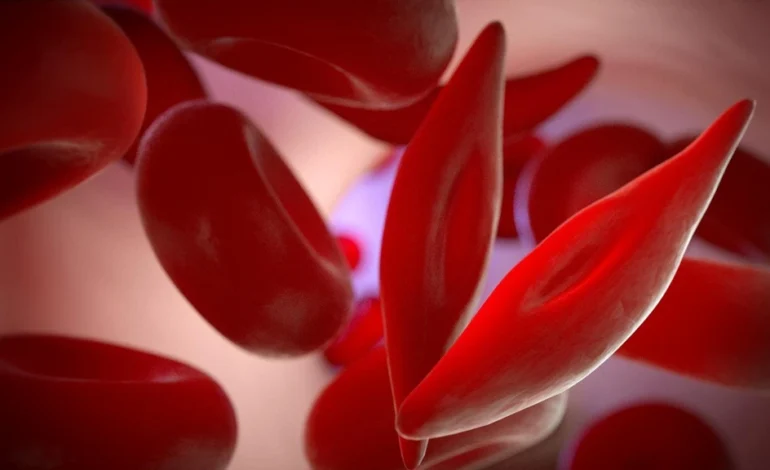
Under normal conditions, red blood cells are soft and round, allowing them to flow easily through blood vessels.
In people with sickle cell disease, however, a mutation in the HBB gene causes hemoglobin to form abnormally. This leads red blood cells to become rigid, sticky, and shaped like crescent moons—or “sickles.”
These misshapen cells create two devastating problems:
- They die prematurely, leading to chronic anemia.
- They block blood flow, causing intense pain and damage to organs.
Instead of lasting about 120 days like normal red blood cells, sickled cells may survive only 10–20 days, leaving the body constantly struggling to replace them.
The result is a lifelong disease defined by episodes of severe pain, fatigue, infections, and complications affecting nearly every organ.
Who Suffers From Sickle Cell Disease?
A Global Disease With Unequal Burden
Sickle cell disease affects millions of people worldwide, with an estimated 7.7 million individuals living with the condition globally.
Each year, over 500,000 babies are born with the disease, most in regions where malaria is common.
The condition is most prevalent among people whose ancestors come from:
- Sub-Saharan Africa
- The Caribbean
- South and Central America
- India
- The Middle East
- Mediterranean countries such as Greece and Italy
In the United States alone:
- Around 100,000 people live with sickle cell disease.
- More than 90% are Black or African American.
- About 1 in every 365 Black births results in a child with the disease.
Another striking statistic is that 1 in 13 Black Americans carries the sickle cell trait, meaning they carry the gene and can pass it to their children.
These numbers reveal something deeply troubling: sickle cell disease disproportionately affects communities that have historically faced healthcare disparities.
Why Sickle Cell Disease Is So Misunderstood
A Disease Shrouded in Silence
For decades, sickle cell disease has existed in the shadows of medical awareness.
There are several reasons why.
1. Historical Inequality in Healthcare
Because the disease primarily affects people of African descent, it has historically received far less funding and research attention compared to diseases affecting wealthier or majority populations.
Many advocates argue that this imbalance reflects broader racial disparities within healthcare systems.
2. Pain That Is Often Dismissed
Patients frequently experience pain crises, episodes where blocked blood vessels deprive tissues of oxygen.
These attacks can be excruciating—often described as worse than childbirth or broken bones.
Yet many patients report that their pain is dismissed or underestimated by medical professionals.
Research has shown that individuals with sickle cell disease often feel stigmatized or not believed when they seek care, especially during emergency visits for pain crises.
3. A Lack of Public Awareness
Unlike diseases with major awareness campaigns, sickle cell disease remains relatively absent from mainstream conversation.
This lack of visibility contributes to misconceptions, including:
- Belief that it is rare
- Confusion between sickle cell disease and sickle cell trait
- Underestimation of its severity
The reality is that sickle cell disease is one of the most common genetic disorders in the world.
The Daily Reality of Living With Sickle Cell
Pain That Cannot Be Seen
The most recognizable feature of sickle cell disease is the pain crisis, also known as a vaso-occlusive crisis.
During these episodes, sickled cells block blood flow to tissues, causing severe pain that can last hours or even days.
Patients often require hospitalization and strong pain medication.
But pain is only part of the story.
Sickle cell disease can cause:
- Stroke
- Acute chest syndrome
- Organ damage
- Kidney failure
- Increased risk of infections
- Vision problems
- Pregnancy complications
Over time, the repeated damage to blood vessels and organs can significantly shorten life expectancy.
In the United States, people with sickle cell disease live more than 20 years shorter on average than the general population.
How Deadly Is Sickle Cell Disease?
The answer is sobering.
Globally, sickle cell disease contributes to hundreds of thousands of deaths every year.
Estimates suggest around 376,000 deaths annually when indirect causes are considered, far higher than traditional reporting suggests.
In many low-income countries, particularly in Africa, more than half of children born with sickle cell disease may die before age five due to lack of diagnosis and treatment.
Yet in wealthier nations, early screening and modern care have significantly improved survival.
Still, even with treatment, the disease remains life-limiting.
Current Treatments for Sickle Cell Disease
There is no universal cure available to most patients today, but several treatments can help manage the disease.
1. Hydroxyurea
One of the most widely used medications, hydroxyurea helps the body produce fetal hemoglobin, which reduces the sickling of red blood cells.
It can decrease pain crises by roughly 50% in many patients.
2. Blood Transfusions
Regular transfusions help reduce the number of sickled cells and lower the risk of complications such as stroke.
3. Pain Management
Pain management is critical during crises and may involve:
- IV medications
- Hydration
- Oxygen therapy
4. Bone Marrow or Stem Cell Transplants
For some patients, stem cell transplantation can cure the disease.
However, it requires a compatible donor and carries significant risks, making it unavailable to many patients.
Breakthroughs: Gene Therapy and the Possibility of a Cure
For the first time in history, science may be approaching a real cure for sickle cell disease.
Recent breakthroughs in gene editing technologies such as CRISPR have led to revolutionary treatments.
One such therapy edits a patient’s own stem cells to produce healthy hemoglobin, effectively bypassing the defective gene.
Clinical trials have produced remarkable results:
- Most treated patients experienced no pain crises for at least a year after treatment.
- Some therapies show over 90% success rates in eliminating symptoms.
These therapies represent a historic moment in medicine.
However, they also come with challenges.
The treatments may cost $2 million or more per patient, making access difficult, particularly in regions where the disease is most common.
The future will depend on making these breakthroughs affordable and accessible.
The Human Cost of Ignoring Sickle Cell
Beyond the science lies a deeper issue: the emotional toll.
Families living with sickle cell disease navigate:
- Frequent hospitalizations
- Chronic fatigue and pain
- Educational disruption for children
- Financial strain from medical costs
For many patients, the hardest burden is not just the disease—but the lack of understanding from the world around them.
Invisible illnesses often bring invisible struggles.
And for those living with sickle cell disease, the struggle is daily.
A Future That Finally Looks Different
Despite decades of neglect, the landscape of sickle cell disease is beginning to change.
More research is underway than ever before.
New therapies are being developed.
Advocacy groups are pushing for better care, more funding, and greater awareness.
And science is moving toward what once seemed impossible: a cure written into the genetic code itself.
But awareness remains the first step.
Because until the world truly understands sickle cell disease, millions of people will continue fighting their battles in silence.
And their story deserves to be heard.
For more information on sickle cell visit https://www.cdc.gov/sickle-cell/index.html
Supported by: https://taylormadelaw.com/