

What Four Days Meant to Me And Why This Series Matters
By Jill Chmielewski for ravoke.com Most medical documentaries are filmed in sterile environments — a doctor’s office, a hospital, a controlled setting. Four Days was the opposite. We filmed the
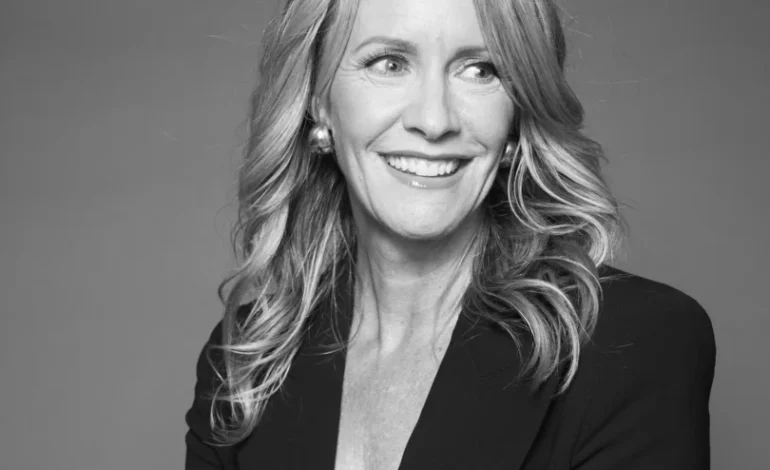

By Jill Chmielewski for ravoke.com
Most medical documentaries are filmed in sterile environments — a doctor’s office, a hospital, a controlled setting.
Four Days was the opposite.
We filmed the series in Costa Rica, far from the clinical spaces where these conversations usually take place. Instead of fluorescent lights and exam rooms, we were surrounded by warm air, tropical landscapes, and long conversations that happened between meals and filming sessions. There was no script, no studio lighting, and no professional hair and makeup team. Just us, the humidity, the long days, and yes, the bugs.
I mean that quite literally.
The setting was lush and beautiful, and very much part of nature. The screens in our rooms had small gaps, and it didn’t take long to realize we were sharing the space with plenty of local wildlife. We saw a tarantula outside, all kinds of insects, and more than a few unexpected critters wandering through. At one point during filming, bugs even started crawling up our legs while we were sitting on set. The crew had to pour water over the grass to move them along so we could keep going.
It was a reminder that we weren’t in a studio. We were right in the middle of nature.
Oddly enough, those moments made the experience feel even more real. There was nowhere to hide, no polished environment to retreat to. It stripped away any sense of performance and made the conversations more honest. In many ways, that’s exactly what made this series so special.
Filming Outside the Clinical Setting
Being off-site changed everything. We weren’t just a camera crew dropping into someone’s medical office and leaving after an interview. We lived together, ate together, talked between takes, and spent full days in conversation in a place that felt open, natural, and extraordinary. It became an immersive experience — one that allowed everyone to relax in a way that rarely happens in clinical settings.
Looking back on filming Four Days, I feel incredibly proud. Proud of the work we created, the crew who made it possible, the experts who showed up wholeheartedly, and especially the five women and one man who came to Costa Rica and trusted us with their stories. Talking openly about something so personal and often overlooked takes courage. Their willingness to show up fully, without knowing what to expect, gave this series its heart.
Most of us had never met before arriving. We didn’t know how the conversations would unfold or what would come up, yet we all said yes. There was a quiet trust that we were meant to be there — a group of strangers traveling to Costa Rica, trusting the process and one another before we even knew each other. That felt important.
The Reality Women Are Facing
Even though menopause and hormones have been my world for years, and even though the conversation around this topic has grown louder recently, I was still struck by how unprepared our guests were.
These weren’t women living under a rock. They were thoughtful, educated, capable women who felt blindsided by what was happening in their bodies. They hadn’t been taught what this transition would actually feel like. They didn’t understand the emotional shifts, the physical changes, or the quiet loss of steadiness that can creep in before you even realize what’s happening. And when symptoms began, many were dismissed, sometimes by doctors, sometimes by loved ones, and often by themselves.
That dismissal isn’t accidental. It’s a pattern. For generations, women who raised these concerns were met with vague reassurances, little investigation, or quiet suggestions that they were overreacting. Women describing real physical changes were labeled anxious, difficult, or told to push through. Over time, many learned to downplay menopause, tough it out, and quietly wonder if the problem was them instead of the care they received.
That needs to change.
Because the ripple effects of hormonal shifts reach far beyond hot flashes and night sweats. They touch relationships, work, identity, confidence, and the ability to feel like yourself in your own life. It can quietly change everything, and it often starts much earlier than women are ever told to expect.
Watching Understanding Happen in Real Time
Spending full days together in Costa Rica, from morning to night, I kept hearing the same questions I’ve heard from women for years: Why do I feel like this? What’s happening to me? Am I overreacting? The fact that these questions haven’t changed, and that women still face this transition without preparation, was sobering. But what was powerful was watching what happened once they began to understand what was happening in their bodies.
We weren’t just interviewing these women and leaving. We were with them. We explained what was happening physiologically, answered their questions without judgment, and reassured them that what they were experiencing was real, normal, and expected.
You could see the shift happen in real time.
The tension in their faces softened. The relief was visible. The self-doubt began to lift. As they began to understand what was happening in their bodies, the confusion they had carried for so long began to settle.
Of course there was some regret — wishing they had known sooner, wishing someone had prepared them. But what felt much stronger in those moments was hope.
Hope that this wasn’t the beginning of their decline.
Hope that they weren’t disappearing.
Hope that, with understanding and the right support, this could be a powerful next chapter rather than the beginning of the end.
The Power of Shared Experience
Being together in that environment also meant we got to know one another more deeply, and some of the most meaningful moments came from the dynamics among the guests.
Rob’s Perspective
Rob’s presence, in particular, really moved me. He came alone, without his wife, who understandably had reservations about participating in something so personal and vulnerable. But Rob showed up anyway. He was incredibly open about the changes he and his wife had been experiencing and how much he wanted to understand what was happening so they could navigate it together.
It’s not always common to see men join these conversations like that. Rob was there to listen and learn — to understand how menopause might be affecting his wife and their relationship, and to figure out how he could better support her. Even though she wasn’t there, his willingness to show up spoke volumes.
Interestingly, while we were talking about menopause and hormonal shifts in women, Rob also began connecting the dots about changes he had experienced himself. When the conversation turned to male hormonal shifts, he started having those “aha” moments — realizing that some of the changes he’d noticed over the years might have had a hormonal component too.
It was a reminder that these conversations often affect both partners in ways people don’t always talk about.
Laura and Carrie
Another dynamic that stood out was watching Laura and Carrie together.
Laura is younger and has not yet experienced menopause, so much of this was unfamiliar territory. She came because she genuinely wanted to understand what Carrie was going through. We sometimes assume that in same-sex couples, there’s an automatic understanding around menopause because both partners are women. But menopause shows up differently for everyone, and when partners are at different stages of life, there can still be uncertainty.
Watching Laura’s concern for Carrie and her sincere curiosity about what Carrie was experiencing was deeply moving. You could feel how much she wanted to understand and support her.
Different Medical Perspectives in the Room
The group of experts added another important layer to the experience. We had clinicians from a wide range of backgrounds — some more conventional, some more functional, some focused on nutrition and metabolic health, and others who approach medicine through a mind-body lens.
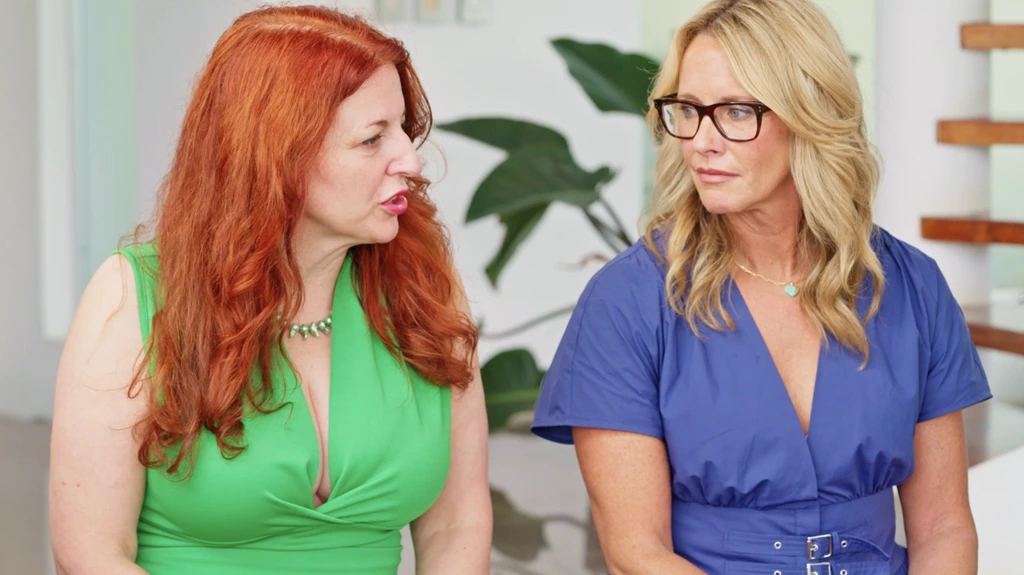
In the last few years, the conversation about menopause has exploded. And with that, many very loud voices have entered the space. Quite frankly, sometimes that includes big egos — people who feel strongly that their approach to menopause is the right one, or the only one.
Medicine has always had a bit of that culture. It’s a profession that often rewards certainty and authority. We’re trained to believe that the frameworks we learned are the correct ones, and that can sometimes create blind spots or reinforce long-standing medical dogma.
Menopause is a perfect example of that.
For decades, the way it has been taught in textbooks and training programs has reduced menopause to the end of a menstrual cycle and a few hot flashes. That simplified view has shaped how generations of clinicians think about menopause and contributed to how easily women’s experiences during this transition have been minimized or overlooked.
But in real life, we see something very different.
The ripple effects of hormonal change go far beyond a few physical symptoms. They affect relationships, careers, identity, confidence, and the ability to feel like yourself in your own life. When medicine treats menopause as a minor event instead of the major physiological transition that it is, women are left navigating it without the information or support they deserve.
Because we had such a wide range of perspectives in the room, those differences sometimes surfaced. There were moments of tension as people reacted to ideas that weren’t part of their usual clinical practice. But in some ways, that was one of the most valuable parts of the experience.
It’s easy in medicine to dismiss what you don’t know. If something falls outside your training or experience, the instinct can be to criticize it rather than explore it.
What I appreciated during those conversations was that, even when perspectives differed, most people were willing to listen, set aside their egos, and remember why we were there in the first place: because women deserve better.
And in the end, despite our different perspectives, that shared goal mattered more than any individual viewpoint.
Why This Series Almost Didn’t Happen
By the end of those four days, the guests felt steadier, more informed, and more like themselves. Watching that shift, even in such a short time, confirmed everything I believe about the power of education and preparation.
What many people don’t realize is that this series almost didn’t happen.
Charles and I spent nearly two years trying to get this project funded. Again and again, we encountered hesitation from people who weren’t sure a documentary about menopause would draw enough interest to justify the investment.
That was surprising to me.
Because menopause isn’t a niche issue. Half the population will go through this transition, and the other half lives alongside it.
In the end, we were trying to fund four days of filming about a biological transition that will affect billions of women. Meanwhile, billions of dollars are routinely spent producing and broadcasting professional sports, much of it focused on men’s athletics, without much question.
Of course, those things have their place. But it does make you stop and ask why conversations about women’s health—even something as universal as menopause—have struggled to get the same attention, urgency, or investment.
I’m grateful the people who believed in this project stayed the course because these stories deserve to be told.
Why These Four Days Matter
What I took away from those four days was renewed resolve.
I already believed this work mattered deeply, but living alongside these women and their stories reminded me how profoundly education changes everything.
When women understand their physiology, they stop questioning their sanity. They stop spiraling and start preparing. They begin participating in their care.
And perhaps most importantly, they start trusting themselves again.
That’s the ripple effect I hope this series creates: not fear, but preparation. Not alarm, but awareness.
Midlife doesn’t have to mean fading away. It can be a powerful chapter. But women deserve to walk into it informed, supported, and taken seriously.
This series isn’t just about menopause. It’s about finally taking women seriously.
And launching it on International Women’s Day feels right because this conversation belongs in the open, treated with the importance it has always deserved.
FAQ
Why was the series filmed in Costa Rica instead of a medical setting?
Filming in Costa Rica created a relaxed, natural environment that allowed participants and experts to have more open and honest conversations than typically happen in clinical settings.
What is the main message of the Four Days series?
The series highlights how unprepared many women are for menopause and how education, support, and understanding can dramatically change the experience of this life transition.
Why are conversations about menopause often overlooked?
Historically, menopause has been minimized in medical training and public discussion, often reduced to a few symptoms rather than recognized as a major physiological transition.
What impact did the experience have on participants?
By the end of the four days, participants reported feeling more informed, supported, and confident about what was happening in their bodies.
Why is menopause education important?
Understanding menopause helps women recognize symptoms earlier, seek appropriate care, and approach midlife with preparation rather than confusion or self-doubt.