

CRPS: The Pain You Can’t See, The Strength You Can’t Kill | A CRPS Warrior’s Story
Written by Matt “Canada” Brown for ravoke.com CRPS doesn’t just hurt the body. It reshapes a life. It arrives without warning and without mercy, crashing into routines, futures, and identities
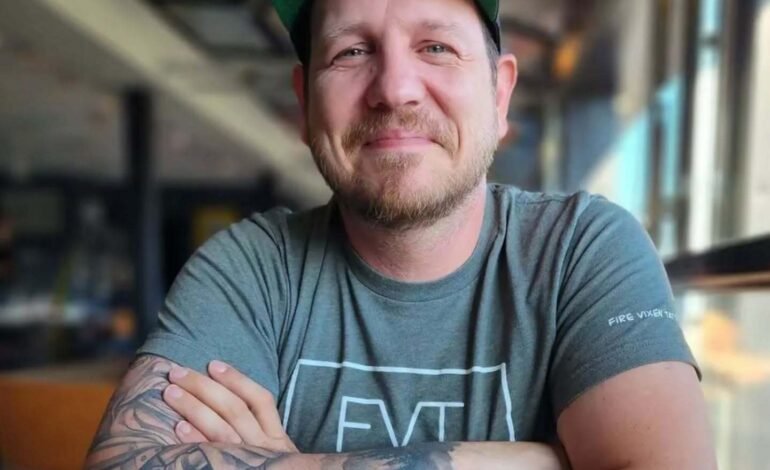

Written by Matt “Canada” Brown for ravoke.com
CRPS doesn’t just hurt the body. It reshapes a life.
It arrives without warning and without mercy, crashing into routines, futures, and identities that once felt solid and dependable. It does not arrive quietly or gradually. It crashes in. It dismantles plans, alters identity, and forces an abrupt reckoning with pain that is constant, unpredictable, and often invisible to the outside world. And yet, within that pain, people continue to adapt, advocate, and survive in ways the world rarely sees.
This story is not a collection of observations. It is the result of ten years spent on the front lines of the disability community. A decade in the trenches. Over those years, I have traveled across North America—from the stages of the Abilities Expo in the United States, to the Canadian Seating & Mobility Conference, to the Empower You Foundation in the U.S. and the Ian Potts Foundation in Canada. The mission has always been the same: to serve as a bridge between the clinical world and lived experience. To provide the education I wish I had when my journey began. Whether speaking to kids, teens, or adults in ability-forward spaces, the goal has never changed: replace pity with innovation, and ensure education leads to genuine inclusion.
Complex Regional Pain Syndrome—CRPS Type 1, Type 2, and NOS—is one of the most misunderstood and devastating chronic pain conditions in existence because its impact reaches far beyond the physical body. CRPS rewrites futures and a person’s relationship with their own body. It forces people to navigate isolation, fear, grief, and systemic disbelief all at once. Yet within this reality exists something rarely acknowledged: resilience. Community. Adaptation. A fight that refuses to end. CRPS is defined not only by suffering, but by the strength of those who endure it and by a collective voice that continues to rise, demanding to be seen, heard, and understood.
Isolation comes early. Not always through absence, but through misunderstanding. The pain is invisible. Flares defy logic. “Good days” and “bad days” make no sense to those on the outside. Friends drift. Conversations shorten. Invitations stop—not out of cruelty, but discomfort and uncertainty. The world becomes smaller. But the deepest isolation is not being physically alone. It is the repeated experience of not being believed. Of having one’s reality questioned or minimized until silence feels safer than explanation.
Fear follows. CRPS conditions the body to live in constant alert, as if danger is always imminent. Movement becomes a calculated risk. Touch can trigger agony. The possibility of another flare looms over even the smallest decisions. Fear reaches into the future, shaped by unpredictability and loss of control. Over time, the nervous system learns to interpret harmless sensations as threats, remaining locked in hypervigilance that rarely shuts off. This is not a weakness. It is survival. Cortisol, fight-or-flight responses, cytokine storms—all can begin with a single fearful thought. The unknown.
Perhaps the deepest wound CRPS leaves behind is the trauma of not being heard. Patients are forced into the exhausting role of self-advocate—explaining, justifying, and proving their pain to doctors, healthcare systems, employers, and even loved ones. When pain is dismissed, the damage goes far beyond physical suffering. It erodes trust in medicine, in institutions, and eventually in oneself. Over time, this invalidation becomes its own trauma—quiet, persistent, and deeply cutting.
Independence erodes gradually. Mobility may go first. Then work. Then routines. Then confidence. Each loss arrives quietly, but together they reshape an entire life. People with CRPS grieve while still alive—mourning who they were while trying to understand who they are becoming. This grief is real. Ongoing. Human. And it deserves space without judgment.
At some point, a question surfaces with quiet force: Who am I now?
As the body changes, identity follows. Strength must be redefined. Productivity reimagined. Worth separated from physical output. The old metrics no longer apply. Slowly, painfully, a new sense of self begins to emerge—shaped not by what was lost, but by what has been endured. This rebuilding is not linear. It is not easy. But it is resilience in its purest form.
CRPS is a biological betrayal. A nervous system that has lost its map. A glitch where the alarm system stays at full volume long after the fire is out. This is central sensitization. The brain and spinal cord become hyper-excitable, amplifying even the lightest touch into agony. Through cortical reorganization—often called brain smudging—the brain’s map of the body blurs. A limb can begin to feel foreign. Not mine. The fight is not against a sore limb, but against a neurological rebellion that has rewritten the rules of existence.
Healthcare often becomes another battlefield. CRPS lacks a single test to prove its severity, trapping patients in endless diagnostic odysseys. Appointment after appointment. Doubt after doubt. The exhaustion of being the “perfect patient” sets in—calm enough to be credible, distressed enough to be taken seriously. When pain is labeled psychosomatic, it isn’t just a missed diagnosis. It’s abandonment. This is white coat PTSD, and it leaves scars.
Healing, here, is not curing. Healing is rebellion.
It is choosing life despite pain. Finding regulation in a system designed to overwhelm. Distraction becomes medicine—not avoidance, but survival. Music regulates the nervous system. Art gives language to the unspeakable. Nature grounds in ways clinics never can. Sometimes survival is a song on repeat. Sometimes it’s sunlight reminding you that you belong to something larger than your diagnosis.
Movement becomes bravery. Not marathons—standing, reaching, navigating the kitchen. For some, the most athletic feat of the day is getting out of bed. Diet becomes agency—not a miracle fix, but a daily act of self-care in a body that often feels uncontrollable. These choices are not easy. They are brave.
“Never give up” is redefined here. It means resting without guilt. Asking for help without shame. Showing up imperfectly. Choosing to stay when the day feels unbearable. Sometimes it means surviving the next ten minutes.
The world will try to define you by your limitations. But while CRPS may control nerve signals, it does not own the mind. Perspective remains sovereign. Meaning remains yours to write. Pain can take sleep, mobility, and certainty—but it cannot take the soul.
And then there is the word yet.
I haven’t managed this flare…yet.
I haven’t figured out this hurdle…yet.
That word is defiance. It leaves the door open.
To every warrior reading this: you are not broken. You are not weak. You are not invisible. You are fighting a battle few can see, and your survival is proof of a strength the world barely comprehends. Through platforms like Ravoke and communities like the Trial by Fire Facebook page, we are building a lighthouse so the next person who crashes into this diagnosis does not have to do it alone.
To the family members, friends, neighbors, and coworkers: watching someone you love battle CRPS carries its own weight. The urge to fix it is natural. But the greatest gift you can offer is belief. CRPS pain is often rated higher on the McGill Pain Index than childbirth or amputation. When they say it is a nine, believe them. McGill University in Montreal, Canada, remains actively involved in CRPS research in 2026 toward understanding root causes.
Stop asking “Are you feeling better?” Better is complicated. Ask instead how their battery is today, or what might make the next hour easier. Be specific with help. Keep inviting without obligation. Bring distraction. Sit in silence. Let them be a person, not a patient.
Understanding the language matters. Allodynia turns a breeze into agony. Central sensitization keeps the nervous system on high alert. Cortical reorganization blurs the brain’s map. Flares come without warning. Neuroplasticity is both how CRPS locks in—and how we fight back.
Ad FAQ
Q: What makes CRPS different from other chronic pain conditions?
A: CRPS is a neurological condition that extends far beyond physical pain, impacting identity, independence, and the nervous system itself.
Q: Why is CRPS often misunderstood?
A: Because CRPS pain is invisible, unpredictable, and lacks a single definitive test, leading to disbelief and dismissal.
Q: Is healing the same as curing CRPS?
A: No. Healing is the presence of life despite pain, not the absence of pain.
Q: How can supporters help someone with CRPS?
A: By believing the pain, offering specific help, continuing invitations, and providing distraction without pressure.
Q: What is the “warrior mindset” in CRPS?
A: It is redefining strength, resting without guilt, asking for help, and surviving moment by moment.
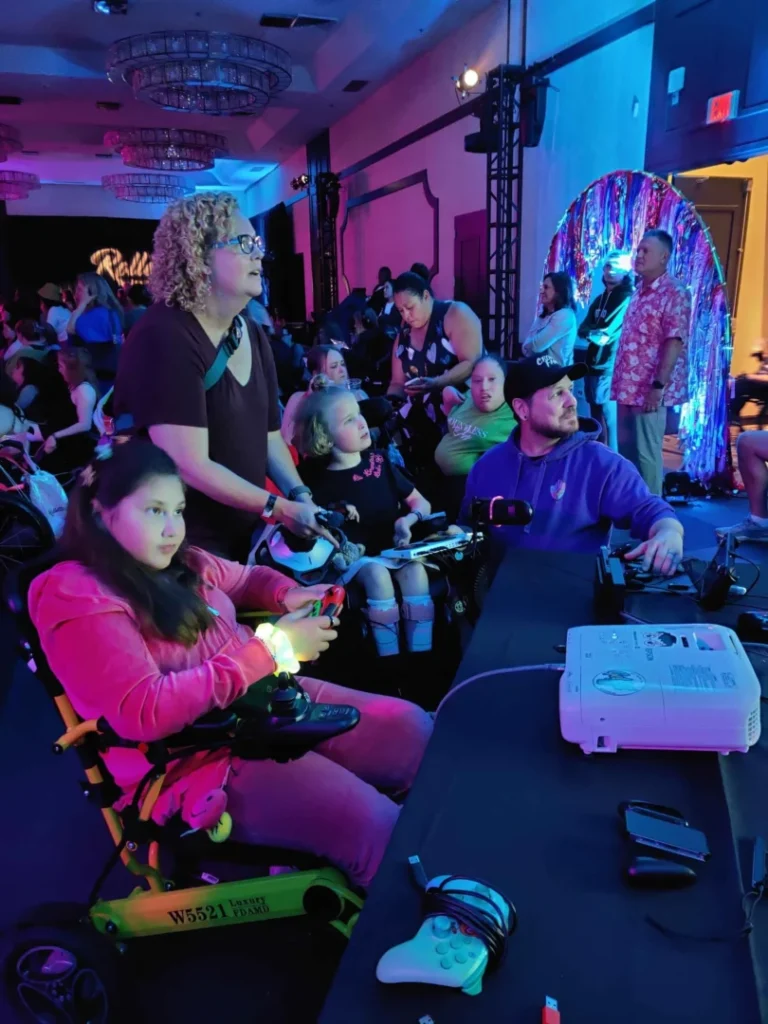
I am Matt “Canada” Brown—founder of the Inclusion Arcade, Brand & Marketing Manager for Ravoke.com, and a globally recognized CRPS advocate. Through gaming and technology, the Inclusion Arcade has supported over 3,800 families across 20 countries, creating accessible spaces where physical limitations disappear. Known for a boots-on-the-ground approach, my work has been featured across North America’s largest disability forums. On April 2, 2026, my evolution story will air on Game Changers on AMI+, a Canadian disability-forward media channel.
We may not choose our diagnosis.
But we choose how we rise to meet it.
You are a warrior.
And the mountain remains.
Learn more at InclusionArcade.ca or linktr.ee/inclusionarcade