





Should Your Dog Sleep in Your Bed? Hear What Experts Say
My first dog came into my life when I was about seven years old. Her name was Foxy — because, well, she really did look like a tiny fox. She


My first dog came into my life when I was about seven years old. Her name was Foxy — because, well, she really did look like a tiny fox. She was feisty, protective, full of personality, and quickly became part of our family. Over the years, I’ve had three other dogs, each one special in its own way. Today, I share my home with a Lab mix who is so human-like he could probably ask for his own room.
I’ve seen countless people let their dogs sleep in the bed, and I always wondered:
Is it really clean? Is it really safe?
Dogs go outdoors, roll around in who-knows-what, and track half the world into our homes. So letting a dog—especially a big one—crawl into bed never sat right with me. Oddly enough, my smallest dog, Shorty, a loyal Miniature Pinscher who slept right beside me every night, never bothered me at all. Maybe for me, size does matter.
Curious, I dug deeper. I spoke with a veterinarian, read scientific studies, and talked with pet owners from different countries. And what I found was surprisingly mixed.
In places like the Caribbean, dogs often stay outdoors and aren’t seen as indoor companions, while in many other parts of the world, dogs are treated like family members—sometimes even like children. So when they jump into bed looking for warmth and affection, it’s hard to say no.
Let’s break down what the experts say.
Is It Clean—or Even Safe—to Let Your Dog Sleep in Your Bed?
Molly Mengerink, Lead Sleep Technician at the Lutheran Hospital Sleep Disorder Center, explains that the science is far from settled. Over 70% of American families own pets, so our desire to stay close to them is no surprise.
A Sleep Foundation poll revealed:
- 56% of adults sleep with a pet in the bedroom
- 35% of children do the same
But the real question is: does snuggling with a pet improve or harm sleep?
Many people report feeling safer and more relaxed with their dog beside them—
46% even say they sleep better with their pet in their bed.
Veterans with PTSD say their dogs help ease nightmares and reduce nighttime anxiety.
Research shows pets can lower:
- Stress
- Anxiety
- Blood pressure
- Feelings of loneliness
Some studies even suggest that children who grow up with pets—especially when exposed early—have lower risks of developing allergies to dander, dust, and ragweed.
But there’s a flip side.
How Pets Might Disrupt Your Sleep
Not all experts are in agreement. Studies warn that pets may contribute to:
- Allergies flaring up
- Asthma symptoms worsening
- Possible exposure to fleas, ticks, or ringworm
- More fragmented sleep
Dogs experience three sleep cycles per night, while humans have just one. That mismatch can disturb your rest more than you realize.
One study in the Journal of Pediatric Psychology found that:
- Children sleeping with pets take longer to fall asleep
- They sleep for shorter durations
- Their overall sleep quality is lower
Poor sleep adds up over time, raising risks for:
- Type 2 diabetes
- Heart disease
- Depression
- Dementia
- Obesity
So while cuddling may feel great, it may not be helping your long-term health.
Read About: Could Your Dog Live Longer? The New Longevity Drug Giving Pet Owners Hope
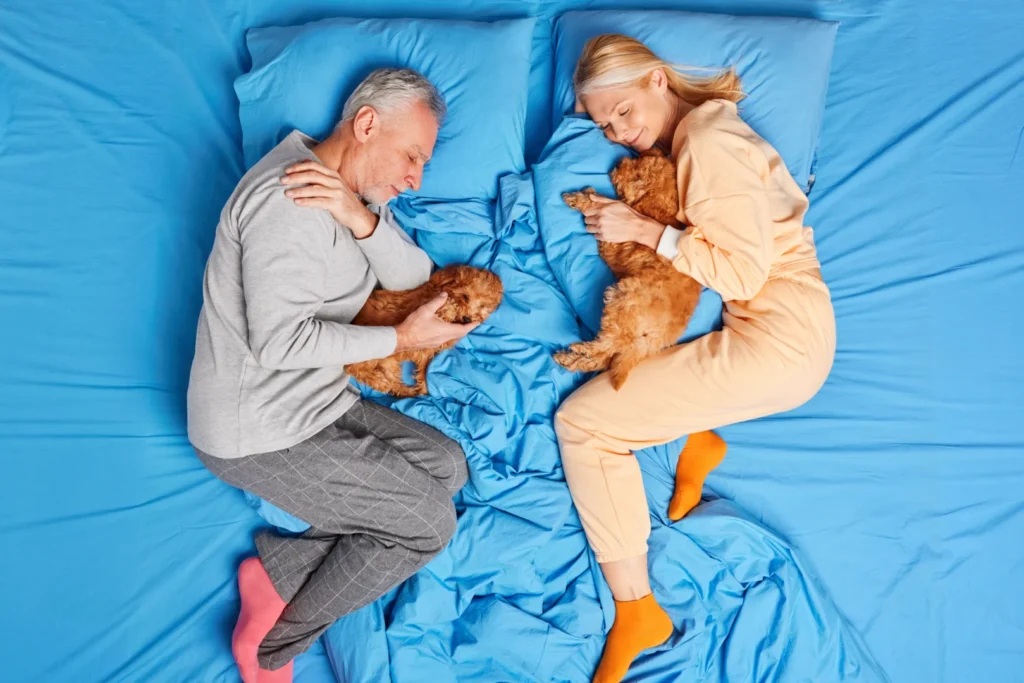
Is It Sanitary for a Dog to Sleep in Your Bed?
This is a big question for many dog owners.
Dogs bring microscopic hitchhikers into your home every day—
dirt, pollen, bacteria, and outdoor allergens.
Most of these are harmless, but they can still transfer onto your sheets.
To reduce risks, experts recommend:
- Regular grooming
- Keeping up with flea & tick prevention
- Washing your bedding frequently
- Washing your dog’s paws or giving a quick coat wipe-down before bedtime
These steps help, but they don’t eliminate everything.
How Common Is Bed-Sharing With Dogs?
You’re far from alone if your dog sleeps with you.
A UK survey of over 1,000 pet owners found that:
- 44% share their bed with their dog or cat
- 32% lose sleep because the pet wakes them at least once a night
Even when pet owners complain about the interruptions…
they still let their furry friend back under the covers.
Where Should Your Dog Sleep at Night?
There’s no one-size-fits-all answer. It often depends on:
- Your lifestyle
- Your dog’s personality
- What helps both of you sleep best
Many owners choose:
- A comfy dog bed
- A crate
- A padded sleeping mat
- Or a spot near the bed
Crates can be especially calming for puppies or anxious dogs—they provide a den-like space that helps establish healthy sleep routines.
Some dogs simply want to be close to you, even if they’re not in the bed.
Dog behaviorists suggest identifying why your dog seeks the bed:
Is it fear? Comfort? Attachment?
Understanding the reason can help you create a sleep setup that works for both of you.
How Dogs May Actually Boost Immunity
Homes with pets have different bacterial environments—and that’s not always a bad thing.
Researchers believe exposure to a wider variety of microorganisms may:
- Strengthen the human immune system
- Lower allergy risks in children
- Reduce sensitivity to dust mites, grass, and ragweed
Infants exposed to two or more pets in the first year of life show significantly lower chances of developing allergies later on.
Germ Exposure — Good or Bad?
Pets can bring helpful microbes into your home…
and occasionally harmful ones.
Potential risks include:
- Bacteria
- Viruses
- Parasites
Those who are most vulnerable—including anyone immunocompromised, healing from surgery, or living with an open wound—should avoid sleeping with pets for safety.
Final Thoughts
Whether your dog should sleep in your bed comes down to:
- Your health
- Your dog’s behavior
- Cleanliness habits
- Your sleep quality
For some, co-sleeping strengthens the bond and reduces stress.
For others, it brings allergies and restless nights.
The key is to find what works for you and your furry companion.
Frequently Asked Questions (FAQ)
Is it unhealthy to let a dog sleep in your bed?
Not necessarily. For healthy adults with well-groomed dogs, the risks are low—but allergies, parasites, and sleep disturbances are still possible.
Can dogs carry germs into the bed?
Yes. Dogs carry outdoor bacteria, pollen, and microorganisms in their fur. Regular grooming and paw cleaning help reduce exposure.
Does letting a dog sleep with you improve mental health?
Many people report feeling calmer and safer when their dog sleeps nearby. This can reduce anxiety and help ease nighttime stress.
Where should my dog sleep instead?
A dog bed, crate, or padded mat near you are great alternatives—especially if your sleep is easily disrupted.
Can sleeping with dogs help immunity?
There’s evidence that exposure to pets—especially in childhood—may strengthen the immune system and reduce allergy risks.
About the Author
Charles Mattocks is an award-winning filmmaker, actor, author, and global health advocate. The nephew of reggae legend Bob Marley, Charles has devoted his life to raising awareness about chronic illness, health equity, and personal empowerment. His groundbreaking television projects — including Reversed and Eight Days — have aired on major networks and inspired audiences worldwide. Through his work in film, writing, and health media, Charles continues to champion wellness and the importance of evidence-based care across communities. Charles is also a published author of two cookbooks and one children’s book.