




Hair Thinning Out of Nowhere? Here’s What’s Really Going On — From Hormones to Hidden Health Triggers
When Thinning Hair Takes You by Surprise (A Personal Note From Charles) This whole piece started with a quiet conversation between friends. One afternoon, a close friend pulled me aside

When Thinning Hair Takes You by Surprise
(A Personal Note From Charles)
This whole piece started with a quiet conversation between friends. One afternoon, a close friend pulled me aside and confessed she’d been losing more hair than usual. Her ponytail felt smaller. The shower drain looked like it belonged to someone with twice her hair. And every time she looked in the mirror, she worried something was wrong.
She asked me to look into it. At first, I hesitated — I’m not a dermatologist, and I never claim to be. But I care deeply about women’s health, especially after working on my series about menopause. So I told her I’d dig in.
Then something unexpected happened. The moment I mentioned the topic publicly, more women reached out — quietly, privately, almost cautiously:
“Charles, I’m dealing with this too.”
“It’s embarrassing, and I don’t know what to do.”
“I thought I was alone.”
That’s when it hit me: hair thinning isn’t just a physical change. It’s emotional. It affects confidence and identity. And because so many women suffer in silence, it becomes an invisible struggle.
So this article isn’t just research. It’s conversations, lived experiences, and a sincere desire to help women understand what’s happening to their bodies.
If you’re reading this because your hair doesn’t feel like your hair anymore, please hear me: you are not alone, you’re not imagining it, and there are real answers.
Let’s walk through them together.
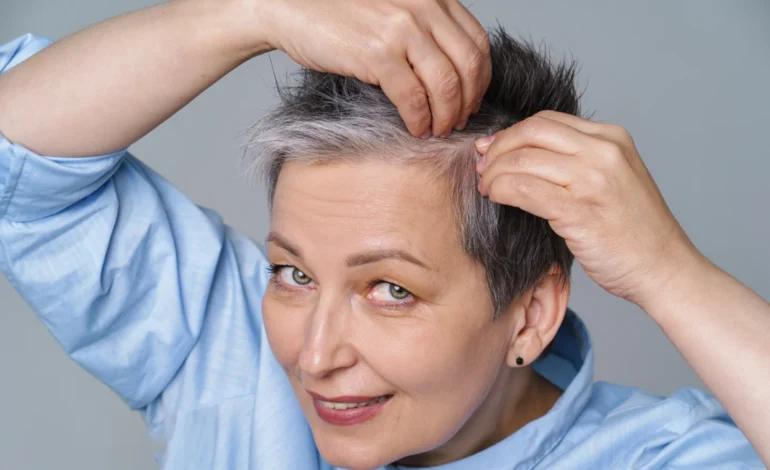
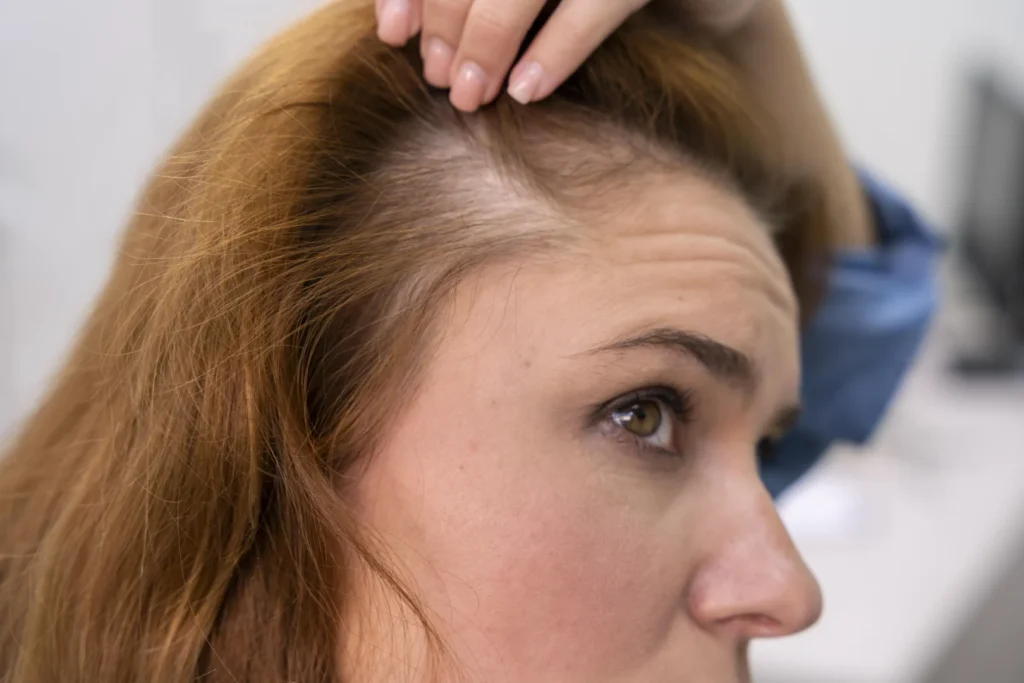
What Thinning Hair Actually Looks Like
Here’s an important fact: we all lose 50 to 100 hairs a day — that’s completely normal.
Thinning becomes noticeable when:
- Your part line looks wider
- You’re shedding more in the shower, brush, or pillow
- Your ponytail feels smaller
- Your scalp starts peeking through
- Your overall density feels uneven
If this sounds familiar, your body is signaling something — and understanding why is the first step toward getting your confidence back.
The 7 Most Common Causes of Sudden Hair Thinning
1. Stress — Emotional or Physical
Grief, trauma, burnout, illness, or surgery can all shock the body into a temporary condition called telogen effluvium, where hair follicles enter a resting phase. Shedding shows up a few months later.
The good news?
This type of hair loss is almost always temporary.
What helps:
- Mindfulness, meditation, deep breathing
- Gentle movement: yoga, walking
- Checking iron, vitamin D, B vitamin levels
- Talking with your doctor about stress-triggered shedding
2. Underlying Health Conditions (Including Thyroid Issues)
Sometimes hair loss is your body waving a little flag saying, “Hey… something’s off.”
Two of the biggest medical culprits are nutritional deficiencies and thyroid imbalances.
Thyroid Imbalances
Both too little thyroid hormone (hypothyroidism) and too much (hyperthyroidism) can disrupt the hair growth cycle.
Hypothyroidism may also cause:
- Unexplained weight gain
- Fatigue
- Constipation
- Depression
- Difficulty concentrating
- Brittle hair, nails, and skin
Hyperthyroidism may cause:
- Unexplained weight loss
- Heart palpitations
- Nervousness or irritability
- Diarrhea
- Moist or clammy skin
- Muscle weakness
How it’s diagnosed:
A simple TSH blood test.
- High TSH usually means hypothyroidism
- Low TSH suggests hyperthyroidism
Other conditions that can cause shedding:
- Anemia
- Autoimmune disorders
- Major nutrient deficiencies
Possible treatments:
- Iron or B12 supplementation
- Thyroid medications
- Immune-modulating therapy
3. Hormonal Fluctuations
Women’s hormones are powerful — and your hair responds quickly when they shift. Pregnancy, postpartum, perimenopause, menopause, and birth-control changes can all cause shedding.
Postpartum thinning can feel dramatic, but it’s extremely common and temporary.
What helps:
- Balanced nutrition
- Stress support
- Medical guidance for perimenopause or menopause
- Patience: postpartum shedding usually improves in 6–12 months
4. Genetic Hair Loss (Androgenetic Alopecia)
More than 30 million women in the U.S. experience genetic thinning. It often shows up as a wider part or general crown thinning.
Early treatment gives the best results.
Proven options:
- Minoxidil
- Spironolactone for hormone-related thinning
- Nutraceuticals like Nutrafol or Viviscal
5. Nutrient Deficiency
Hair is a living part of your body — it mirrors what’s happening inside. Deficiencies in:
- Iron
- Protein
- Zinc
- Vitamin D
- Biotin
…can weaken follicles and slow growth.
What helps:
- Lean proteins
- Leafy greens
- Omega-3s
- Hydration
- Avoiding extreme or crash dieting
6. Medications
This is one of the most overlooked causes of sudden shedding.
These medications may trigger hair loss:
- Cholesterol-lowering drugs
- Blood pressure medications
- Warfarin (a blood thinner)
- Psoriasis medications
- Anti-seizure drugs
- Anti-arrhythmia medications
- Some birth control formulations
If the timing lines up with a new prescription, speak with your doctor about alternatives.
7. Aging
As we age, hair naturally becomes finer and grows more slowly. This is normal — not a sign that something’s wrong.
Helpful habits:
- Gentle scalp massage
- Minimizing heat styling
- Avoiding tight hairstyles
- Collagen or amino-acid supplements
How Hair Actually Grows
Understanding the hair cycle helps everything make more sense:
- Anagen (growth): 2–8 years
- Catagen (transition): 2–4 weeks
- Telogen (resting/shedding): 2–4 months
Anything that disrupts this cycle — stress, hormones, medication, illness — can lead to visible thinning.
Science-Backed Treatments for Thinning Hair
Topicals
- Minoxidil
- Dermatologist-grade serums
Orals
- Spironolactone
- Finasteride (selected cases)
- Iron supplements
Natural/clinical therapies
- Low-level laser therapy
- PRP (platelet-rich plasma)
- Nutritional support systems
Lifestyle
- Stress management
- Sleep
- Hydration
- Balanced meals
How To Prevent Future Hair Loss
- Avoid tight styles and heavy heat tools
- Use sulfate-free, nutrient-rich products
- Keep the scalp healthy
- Stay hydrated
- Maintain consistent sleep
- Get routine bloodwork if you’re at risk
Frequently Asked Questions
Is hair loss reversible?
Sometimes, especially stress- or nutrient-related loss.
Does cutting hair make it grow faster?
No, but it reduces breakage, making growth look healthier.
Which foods support hair growth?
Protein, leafy greens, eggs, salmon, nuts, seeds, and avocados.
How long does regrowth take?
3–6 months to notice changes; up to a year for full restoration.
Dermatologist or Trichologist?
Start with a dermatologist to rule out medical causes first.
You’re Not Alone — And You’re Not Without Options
Hair thinning can feel scary, personal, even isolating — but you are far from alone. More women experience it than you can imagine, and silence only makes it harder.
If my friend hadn’t opened up to me, I might never have explored this topic. But I’m grateful she did — because the more honestly we talk about women’s health, the more empowered we all become.
And I truly want to hear from you.
Your stories. Your questions. Your journey.
We grow stronger when we learn together.
About the Author
Charles Mattocks is an award-winning filmmaker, actor, author, and global health advocate. The nephew of reggae legend Bob Marley, Charles has devoted his life to raising awareness about chronic illness, health equity, and personal empowerment. His groundbreaking television projects — including Reversed and Eight Days — have aired on major networks and inspired audiences worldwide. Through his work in film, writing, and health media, Charles continues to champion wellness and the importance of evidence-based care across communities.